

Imagine that you are driving home after a long day at work: It’s 6 p.m. on a November evening and it’s raining. The Sun has set, it’s getting dark, and the streetlights turn on. The highway appears slick and droplets stick to your windshield. Traffic slows, but some drivers maintain normal speeds. Wet pavement reflects light back into your eyes. As a lighting designer, you may be thinking, “What could I do to make these streetlights perform better under these conditions?”
There has always been a dichotomy between architectural design and civil engineering work. Architects design buildings and their systems: structural, HVAC, electrical, lighting, and building envelopes. Civil engineers design infrastructure that serves the public: roads, bridges, water systems, and drainage.
The clearest distinction between the two is the level of control of the design canvas. On an architectural project, the architect and the trades involved, including architectural lighting, where most lighting is used, have real control over the space they are creating. They specify luminaire locations, choose mounting heights, and define the geometry. The environment is shaped to serve the design. On the other hand, civil engineers are highly subject to current conditions. The infrastructure frequently already exists. Geometry was set by other disciplines, for other purposes, or by nature sometimes decades or millennia ago. The classic example is street lighting mounted as attachments on transmission poles. The pole placement is based on maximum voltage of the wires and has nothing to do with the lighting needs present at that specific location. Civil lighting design must adapt to an existing reality rather than define it. The same is true for a resort built across variable terrain, a park shaped by nature, or a campus assembled over decades.
Lighting has this same split in practice. But the profession has never identified the civil side. Without its own identity, civil lighting design has been practiced using architectural tools and methods that were not built for the conditions it faces.
An Overlooked Space
Civil lighting design has never had much appeal. Many in the lighting profession avoid it precisely because it is engineering, not expression. This has left a vacuum. The most consequential lighting decisions, those affecting transportation safety, grid resilience, ecology, and other critical domains that light touches, are being made without the rigor that lighting professionals bring to architectural work. This is not criticism; it is an opportunity.
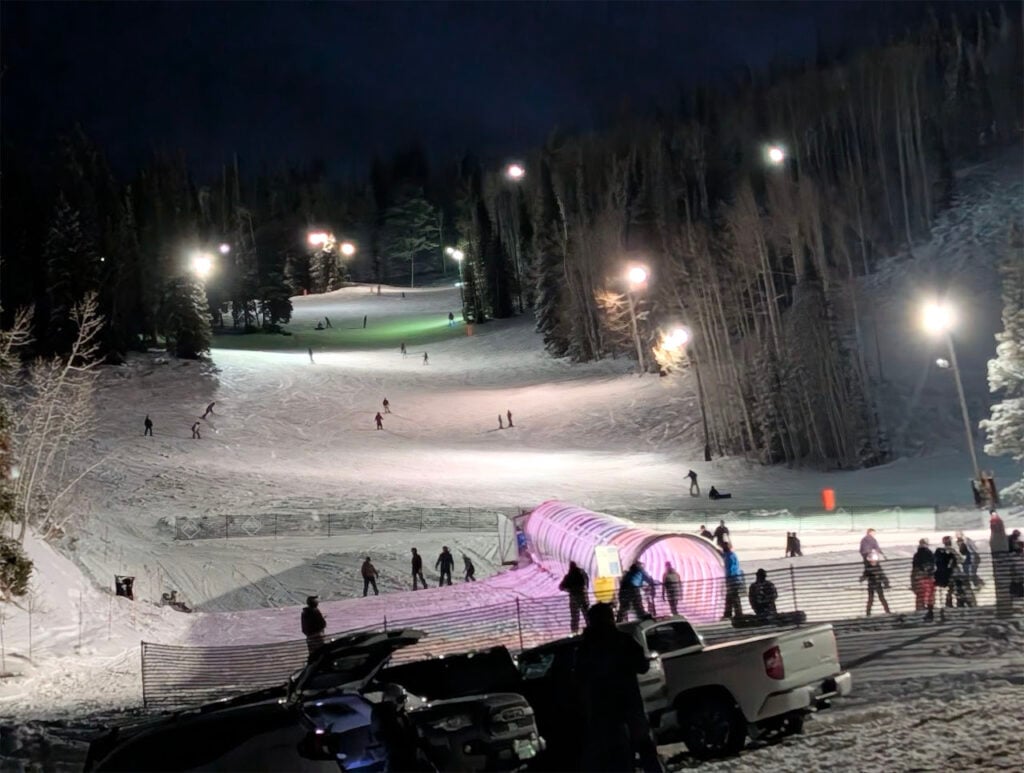
Civil lighting design extends beyond roadways. Any lighting problem where the practitioner lacks control of the environment (e.g., a ski slope, university campus, national park, or military installation) is a civil lighting design problem. Conversely, tunnels and parking structures, though parts of roadway infrastructure, often allow the level of control that suits architectural methods. The distinction is control, not application.
Some practitioners have been doing this work for years, without the vocabulary, tools, or professional recognition to match the importance of what they do. They are the first civil lighting designers, and they deserve credit for advancing this work before it had a name.
Where the Tools Fall Short
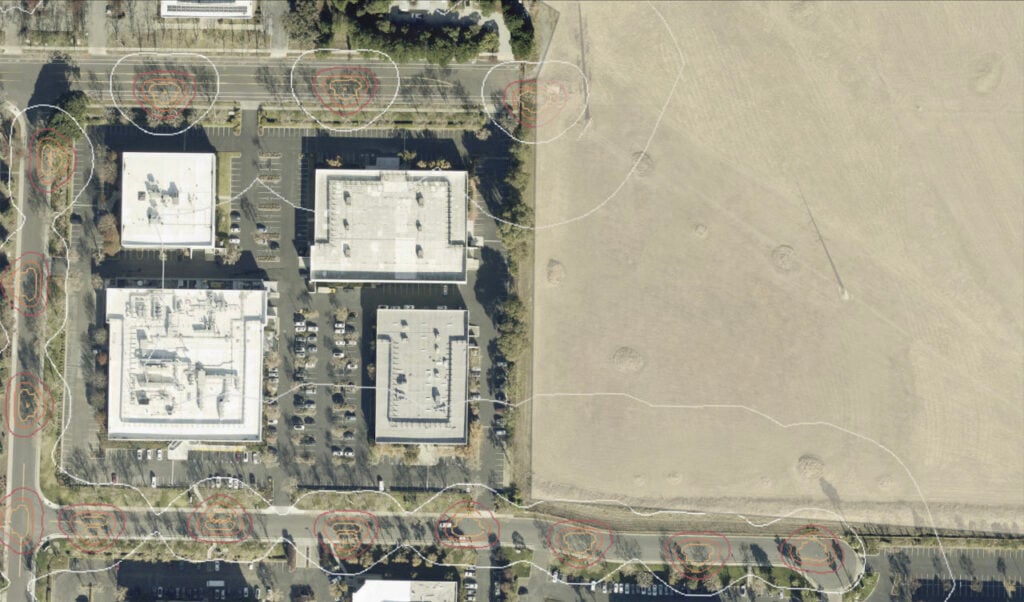
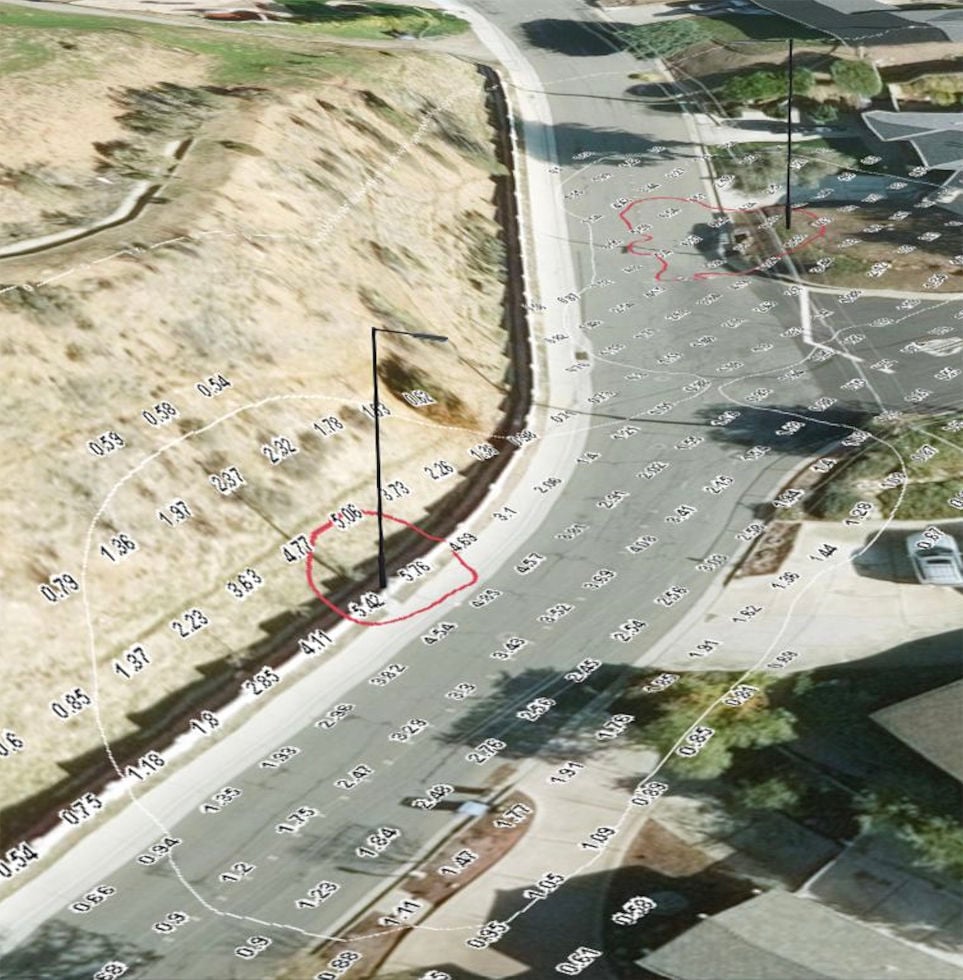
The photometric tools that define our practice were built for architectural conditions. These tools produce calculations on horizontal and vertical planes within bounded layouts, typically only a few acres in size. They are excellent at supporting lighting design work when the designer has control of the space. But when the conditions are spread across an entire city, and are therefore inherited rather than controlled, these tools cannot follow. A network of lights on utility poles placed for power distribution is not a collection of typical layouts with standard pole spacing. Decades of accumulated infrastructure does not have repeatable geometry. True slope is difficult to represent in tools that break surfaces into idealized horizontal, vertical, or flat planes.
The industry bridges this gap by designing a handful of typical layouts in photometric software, then using a table to assign those templates across a much larger system. One typical design represents thousands of actual layouts in the field. Typical designs are a guess at the median. They all deviate from the real world. We accept this deviation as the cost of expediency in design. How much deviation is acceptable, and is that amount consequential?
Does a mast arm at a different angle than what exists warrant an alternate choice of luminaire? What about a 5-ft difference in road width? Are these tradeoffs acceptable because they are “close enough”? I believe either change makes the design no longer applicable.
Template-based design was a reasonable compromise. Designing thousands of unique intersections individually is infeasible with architectural tools. Blunt rules like full cutoff exist for the same reason: When you cannot evaluate glare at every location, you eliminate it everywhere. However, civil lighting design tools can evaluate thousands of contexts individually. Compromise is no longer necessary. We no longer need to treat every location the same because we lack the ability to treat them differently.
No committee approved template based extrapolation as a design methodology. The workflow exists because the software doesn’t meet the challenge, and the industry built a practice around the limitation. But the problem is larger than software.
Beyond Lighting Software
Civil lighting design is not just architectural lighting design with better tools. It embraces domains that are largely outside the lighting profession today. It is essential that civil lighting design speaks the language of crash modification factors, the Fatality Analysis Reporting System, and the Safe Systems Approach. It must engage with ecological data, wildlife migration forecasts, as well as legal frameworks like NEPA and the Migratory Bird Treaty Act. It needs to understand the duck curve and how lighting, which represents 15 to 20% of the worldwide electric grid, can serve demand response and grid resilience. It operates at network scale in geographic information systems (GIS), not scene-by-scene in computer-aided design or building information modeling, performing citywide photometric calculations on real terrain and real geometry. And it connects to networked lighting controls, dispatch systems, and real-time data feeds. Civil lighting design understands IT architecture and dimming strategies, not fixture selection.
As lighting professionals, we work with light every day, bringing a true understanding of the medium that other industries lack. We have the expertise to lead in every one of these areas but only if we are willing to reach beyond the tools and frameworks built for architectural work and embrace new ways of thinking about our challenges. Building codes are not the right remedy for lighting significantly impacting a protected species. The question is whether the profession will step into civil lighting design and lead or leave civil lighting design to domains that understand the problems but not the medium.
The IES is, by its own name, an engineering society. “Engineering” has always been broad enough to encompass both architectural control and civil constraint, both new construction and existing conditions, both bounded sites and public networks. The civil side of lighting has never been able to claim its rightful place under that umbrella. It is time.
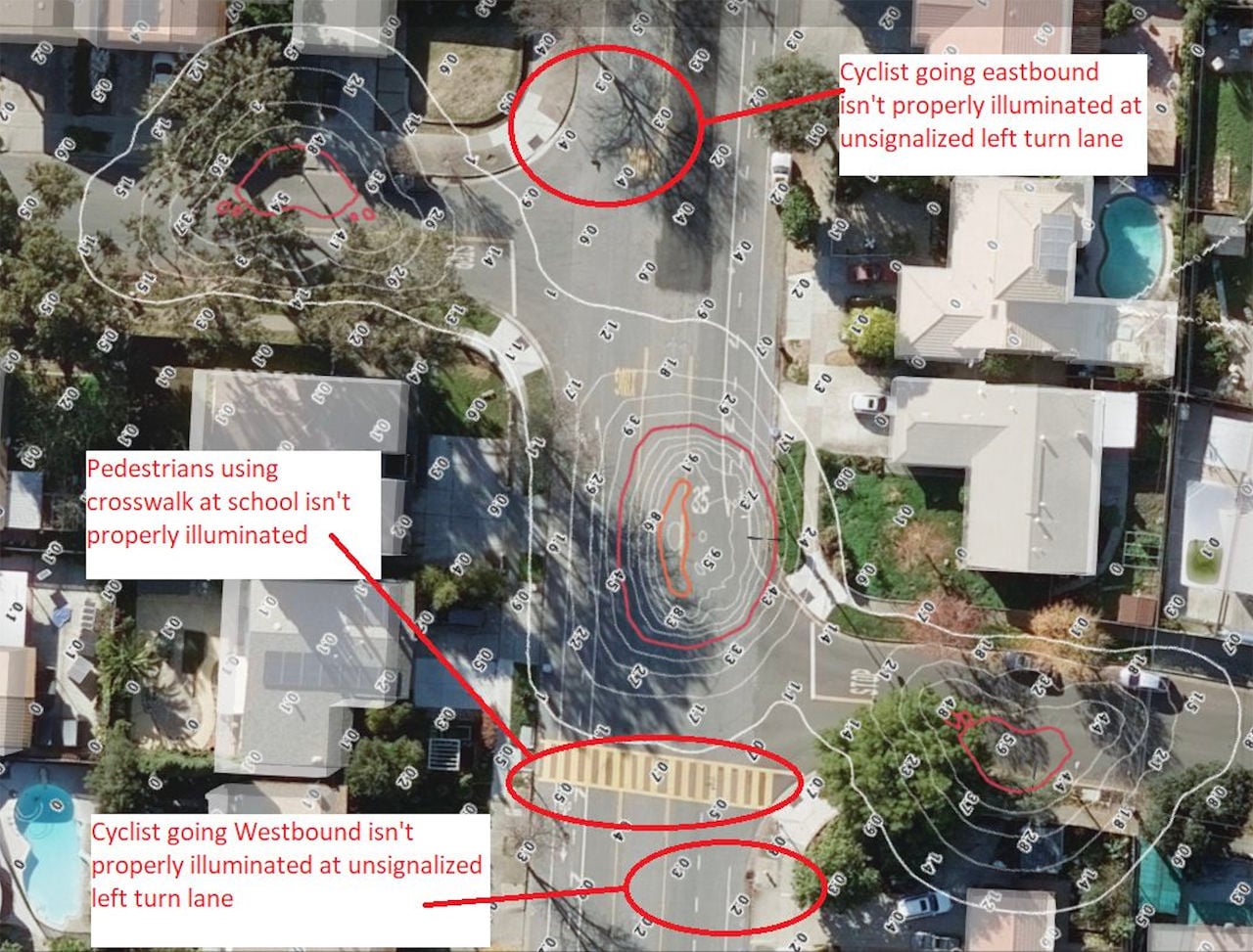
Let’s return to that rainy commute. Does wet pavement call for lower (or higher) lighting levels? Would a change in light color make a difference? Can we adjust the distribution so light is only emitted at angles that won’t reflect into drivers’ eyes? In rain, do crosswalks and bike lanes, where vulnerable travelers are hardest to see, require different colors, levels, or metrics altogether?
As you get closer to home, you think about luminance and light being reflected off the ground to a driver’s eyes, your eyes. These are challenging lighting questions that civil engineers and transportation planners aren’t equipped to answer. Civil lighting design requires lighting professionals who understand the medium and apply the right tools and data to meet these challenges. It is an invitation to step into a space that desperately needs us.