
Addressing the question that ruins conversations
Since I began advocating for natural darkness, there is one question that has been an incredible obstacle to awareness-creation, like a record scratching to a halt. This one question thwarts our collective thought process and subsequent understanding by immediately creating a lens of fear: Is more light safer?
As we struggle to create understanding of light pollution, climate change is becoming more extreme. This year, the world recorded the warmest January ever. Simultaneously, the U.S. recorded the coldest January since 1988. This radicalization of temperatures on Earth is a symptom of global warming and the melting of ancient ice caps: more water, more weather.
Not only are global temperatures breaking records, it has also never been brighter on the planet. We are currently experiencing a 9.6% year-over-year increase in sky brightness.1 As humans have become comfortable with light and light-driven information at all hours of night, we have pushed darkness to the edges of existence, both for ourselves and wildlife.
In our own self-poisoning, we have lost sight of experiences in darkness altogether. Most of us no longer create memories underneath the night sky, which is now doubling in brightness every eight years.1 One could perhaps think of the data bits of light-driven information as having the same impact that water has on weather: more light-driven information, more light pollution. If we cannot remember it, we can neither protect it nor cultivate it. Therefore, it is imperative that we combat our amnesia by cultivating awareness in the collective understanding of light pollution and how to solve it.
Yet there is a very specific stumbling block in our discourse around light pollution that has created chronic confusion and disagreement about best lighting practices. In my experience in project meetings with the public, planning boards, and municipalities, the question “Is more light safer?” has been a continual driver of light pollution and lower-quality lighting installations in the zeitgeist.
When posed to a diurnal species with an innate propensity to feel safety and comfort in lit environments, the question is leading. More often than necessary, it funnels out a “yes.” In addition, this nearly omnipresent question has disproportionately framed our conversations around light at night, often rerouting our thought process to unhelpful places.
The question then begs us to ask, safe from what? Immediately, we are set out on a line of inquiry based in fear, and much less to do with lighting. The mind is provoked to populate potential threats of danger, so it becomes easy to suggest adding light as a harmless solution, as framed by the question itself. Studies show that when stressors are introduced, subjects are unable to think as clearly or creatively and generally fall back on habit and intuition.2
A Betrayal of Intuition
This is an issue because best lighting practices are often counter-intuitive. Right now, many lighting projects default to adding more light simply because it feels safer to do so. Yet a dive into the research reveals no such simple conclusion. Studies often show reasons why more light is not safer.
For instance, a 2015 study on street lighting in England and Wales showed that a reduction in light levels held little correlation to increases in crime or traffic accidents.3 Furthermore, a study in Chicago revealed that when city lights went out, crime shifted to where the lights remained on.4 Both of these examples show how our intuition has often misguided our understanding of the role of light upon safety.
Our intuition has also betrayed us to believe that light at night is innocuous. Sadly, it is not yet common knowledge that exposure to artificial light at night is abjectly not safe for many other living things. One of the most glaring omissions in the thought process created by the question “Is more light safer?” is the heartbreaking impacts upon wildlife. From impeding nocturnal pollination to contributing to the decline of a staggering 49% of bird species on the planet,5 the lack of consideration for wildlife in our thought process is evident.
Yet light pollution is harmful for humans, too. Recent studies have shown that exposure is not only linked to cancer but also neurodegeneration and diseases like Alzheimer’s.6 When we overuse safety as a lens for lighting design strategies, we also dupe ourselves out of our own well-being. Therefore, perhaps it is the question itself that is confusing us.
More light does not always mean more visibility. This question eclipses our understanding of dark adaptation of the eye. More light than necessary interrupts this process, which can take up to an hour. Moreover, the lighting designer has many tools and strategies to create nighttime environments that build harmony with both ourselves and the natural world, even some we have not thought of yet. By constantly over-lighting, we prevent innovation in design to find better strategies that work with the eye’s ability to see in lower light levels.
Currently taking place on Earth are large swaths of empty parking lots being illuminated night after night for few to zero occupants. Satellite data revealed that continuously lit spaces across the surface of Earth increased in brightness by 2.2% per year between 2012 and 2016.7 Yet modern controls systems can easily create lighting plans with intricate dimming schedules down to a single fixture. What keeps these spaces illuminated unnecessarily, causing untold harm to ecosystems, is not an obstacle with technology. It is the thinking behind it.
Destroying the Question
Susan Sontag once said, “The only interesting answers are those which destroy the questions.” If our own research reveals that adding light just to increase safety is often harmful and costly with little to no benefit for humans, then why are we letting this question inform our decisions so consistently? We could be designing spaces with much less light in terms of both intensity and duration, while creating feelings of safety and gaining back periods of essential ecological darkness. Therefore, we must ask ourselves better questions to get better results.
The question “Is more light safer?” is an obstacle to higher-quality discourse. It oversimplifies the art and science of lighting into a yes or no question and narrows the mind around answers based in fear. Its flawed trajectory repeatedly gaslights us to make ill-informed and hasty design decisions. This question arrests the progression of thought and becomes a direct barrier to the wealth of knowledge currently available on how to light more sustainably for all living things. Overall, it creates confusion around best lighting practices and generates light pollution.
As designers, the quality of our methods and tools impacts the design. If some of our tools are questions themselves, we must design the questions we work with to create the quality of discourse we need, faceted enough to hold what we already know to be true, and open enough to invite in new knowledge.
Therefore, I propose that the dangerously oversimplified question “Is more light safer?” be distilled out of our discourse in the lighting industry. When we hear this question being asked, let us actively design the discourse, redirect the question, call out how it has typically created less quality in design, and elevate the conversation with other, more open-ended and truth-seeking questions, such as:
- Is more light less safe?
- What are the downsides to more light?
- How can light decrease safety?
- How can we increase visibility?
- Is more quality lighting safer?
- What factors improve lighting quality?
- What factors improve visibility?
- Is more darkness safer?
- How can darkness increase safety?
- How can nighttime environments promote wellbeing?
- Does more darkness create well-being?
- What are the benefits of darkness at night?
- How can optics and controls help find balance?
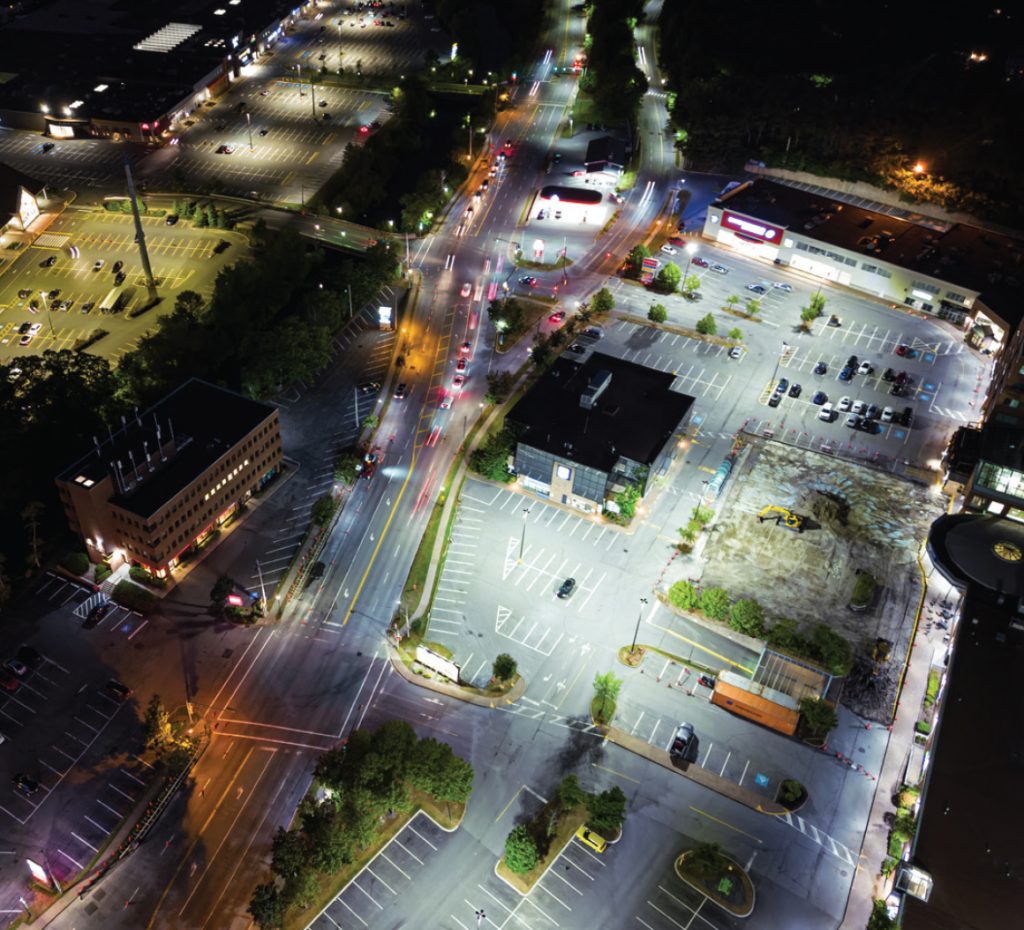
Photo: iStockphoto/shaunl
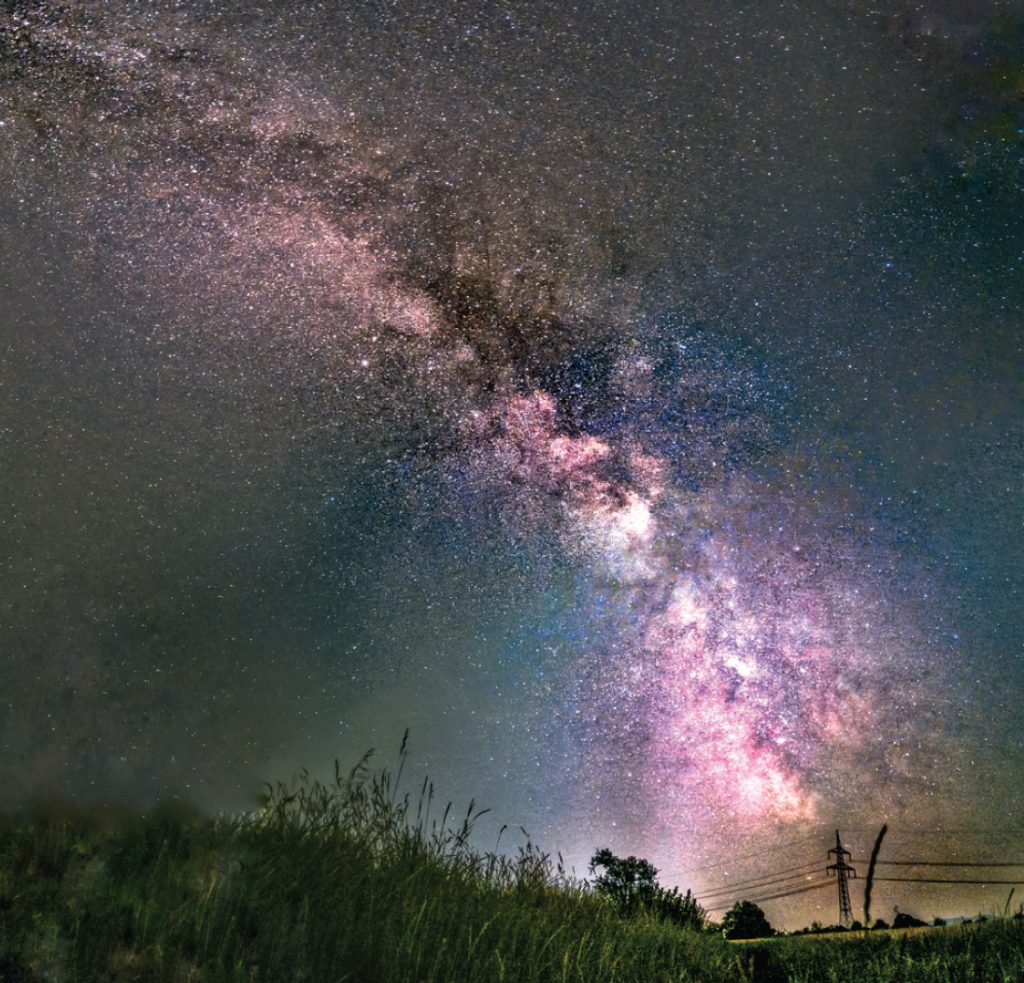
Photo: iStockphoto/Joshua Hochholdinger
Unmasking Myths
When the wrong ideas infect the collective consciousness, humanity has tried to debunk them in the past. In the 1950s, we thought that smoking was not that bad of a habit. Doctors even recommended it. Now, we maintain public outreach to constantly combat human attraction to smoking.
While the problem of light pollution is not intuitive to humans, Earth’s ecosystems are not supposed to be bathed in constant light at night. When we only think in terms of safety, we completely miss the biological impacts of light. Moreover, these costly interventions of light offer very questionable improvements to safety.
It is possible to elevate our consciousness through a greater quality discourse. We must expand beyond the ideas of “more and brighter” and continually refine our dialogue based on the most current findings and strategies. The question “Is more light safer” preys upon our fears, like a tripwire within our thinking. By designing better questions, we can provoke the collective consciousness to find better answers.
Global warming is a complex issue with many contributing factors, but with light pollution, we have the unique ability to solve it right this second. As professionals in the lighting industry, we must lead the discourse so that we can lead the way out of light pollution. The irony is that reclaiming the night sky and the passive meditation it provokes would clarify our thinking and discourse too.
The collective well-being is based in the ancient balance of light and darkness. The current trajectory of light pollution is haunting, but there is one blatant fact that is full of hope—Earth is still a beautiful place to inhabit here and now. There remains a turning point back to the safety of the natural night. When we think of safety, we must expand our discourse to create questions that hold more truth, and solutions that bring the most well-being for all living things.
THE AUTHOR |
- Jane Slade, MID, LC, is a principal at Speclines in Massachusetts, a lighting manufacturer’s representative agency specializing in public outdoor lighting. She is the host of the podcast Starving for Darkness and a recent recipient of DarkSky International’s Dark Sky Defender Award.
References:
- C.C.M. Kyba et al., “Citizen Scientists Report Global Rapid Reductions in the Visibility of Stars From 2011 to 2022,” Science, vol. 379, no. 6629, 2023.
- R. Yu, “Stress Potentiates Decision biases: A stress induced deliberation-to-intuition (Sidi) model,” Neurobiology of Stress, vol. 3, 2016.
- R. Steinbach et al., “The effect of reduced street lighting on road casualties and crime in England and Wales: Controlled interrupted time series analysis,” Journal of Epidemiology and Community Health, vol. 69, no. 11, 2015.
- A. Chalfin, J. Kaplan, and M. LaForest, “Street light outages, Public Safety and Crime Displacement: Evidence from Chicago,” SSRN Electronic Journal, 2020.
- BirdLife International, “State of the World’s Birds 2022: Insights and solutions for the biodiversity crisis,” Cambridge, UK, 2022.
- M. Cao, T. Xu, and D. Yin, “Understanding light pollution: Recent advances on its health threats and regulations,” Journal of Environmental Sciences, vol. 127, 2023.
- C.C.M. Kyba et al., “Artificially lit surface of Earth at night increasing in radiance and extent,” Science Advances, vol. 3, no. 11, 2017.