



What is the ideal human habitat?
In our surveys, 90% of individuals identify natural landscapes as their preferred environments, free from any built structures. The remaining 10% favor outdoor areas with built elements like patios, surrounded by nature. Why? As the biophilia theory explains, we are not just intertwined with nature, we are nature. Human biology and psychology evolved to interact with natural environments and each other. Biophilia explains why we like similar landscapes all over the world, no matter the cultural background. It explains the views we prefer, as well as how we interact with natural or electric light.
Research shows deeper connections to nature improve mental health.1 Like all species, we have an ideal habitat that we understand through all our senses. These habitats make us feel safe, and orient us toward shelter, food, and water.
When we design these ideal habitats, we are able to increase comfort, happiness, and feelings of restoration. This can provide measurable benefits including stress reduction, increased recruitment and retention, improved productivity, higher learning and healing rates, increased retail dwell time, higher hospitality daily room rates, and even increased public safety and lower crime rates.2
This approach to creating ideal spaces is known as biophilic design—an intentional integration of natural elements into built environments to foster a stronger connection between people and nature. Biophilic design helps us understand what that ideal habitat looks and feels like. Renowned biologist E.O. Wilson said, “The crucial first step to survival in all organisms is habitat selection. If you get to the right place, everything else is likely to be easier.”
Ideally, biophilic design fosters our connection to nature through access to sensory-rich outdoor spaces. However, we spend, on average, 90% of our time indoors, so how do we best create indoor environments that help us thrive? It’s not about isolated features, like plant walls (though that can be an aspect of a holistic approach), but designing spaces that align with our biological and psychological needs. Think of biophilic design as a progression—the more sensory-rich and biodiverse a space, the greater its impact on well-being.
Light in Our Environments: A Biological and Psychological Experience
There are three key main categories of biophilic design: natural elements and our sensory experience of them, indirect experience of nature, and experience and place. Let’s examine each of these categories with an eye on illumination.
- Natural elements and our sensory experience of them comprises our direct connection to nature, which provides a full multi-sensory experience. It includes actual natural elements and systems, such as plants, water, animal contact, weather, time of day, light changes and intensity, and geology.
Light-specific experiences:- Biological: Humans evolved under the Sun and stars. The warmth from fire at ground level was our first source of human-made light. It explains why conversations feel more intimate around a fireplace and the desire to use the lower placed light of table lamps in the evening in our homes versus overhead lighting. Our circadian rhythms were built from the natural locations, the horizon and intensities of light in our environment, and allowing access to this keeps us connected to nature.
- Psychological: The presence of light outdoors offers us opportunities to experience warmth and coolness on our skin as we move through bright and shadowed spaces. We might watch shadows play through the dappled light of trees. We orient ourselves to the time of day, season, and local ecology through the quality and strength of light, knowing when to seek protection and where to find restoration.
- Indirect experience of nature involves nature representation through shape, form, and patterns. It may include materials that show our connection to time and place, as well as natural colors and materials that reflect a place’s specific ecology. These elements work best when they balance complexity and simplicity. Our brains are designed to thrive on the richness of information in natural environments, interpreting patterns and details as we engage with them. For example, as we move closer to an object, finer details are revealed.³
Light-specific experiences:- Biological: As humans, we understand the aging process, see the world changing around us, and crave detail and the patina of time. The human eye has evolved to process that detail within our retina, sending light information through the optic nerve to our brain, creating images that guide our lives. We use that information to make decisions, process our surroundings, discern facial expressions, and more.⁴
- Psychological: The indirect experience can be found through art, finishes, and shapes that mimic or represent those in nature. Art or finishes that offer layers of complexity, such as exposure to increased detail as one moves closer to the object, can feel engaging. Artwork of landscapes is generally calming. Many buildings are designed without the sensory complexity humans crave, and the indirect experience works to correct this.
- Experience of space and place focuses on how we’ve adapted to prefer specific layouts of spaces. Concepts like prospect and refuge balance open views with areas of protection, while mystery and awe invite curiosity and connection. Fostering cultural and ecological attachment to places helps create spaces that feel alive, meaningful, and deeply rooted in their surroundings.
Light-specific experiences:- Biological: The eye’s ability to perceive light and shadow helps create depth and texture, layering our environment with information. Within our natural or architectural spaces, we can start to perceive foreground and background and piece together which areas may feel safe or threatening.
- Psychological: Mystery and awe are important components of how we engage in our world to bring meaning. Mystery entices us to explore, and awe can make us feel as though we are part of something larger. When we experience awe, regions of the brain associated with ego—including self-criticism, anxiety, and depression—quiet down.⁵ Light offers many opportunities to experience awe—the way the Sun shines through the leaves creating new pathways, the glistening of light on rippling water giving it life, and sun rays peeking through clouds on a cloudy day to touch the earth below.
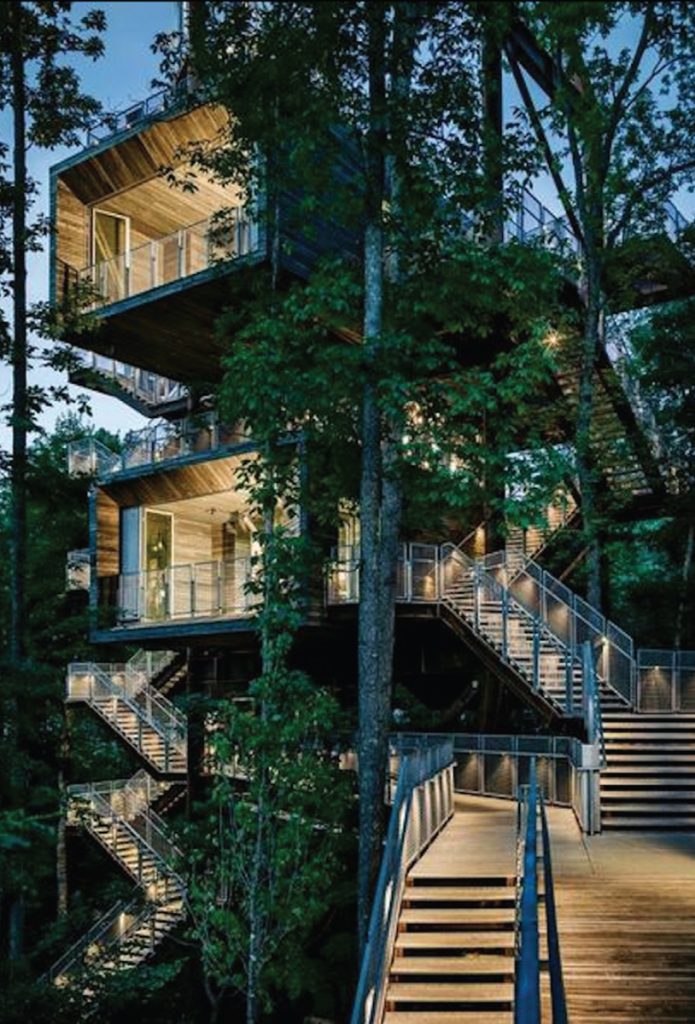
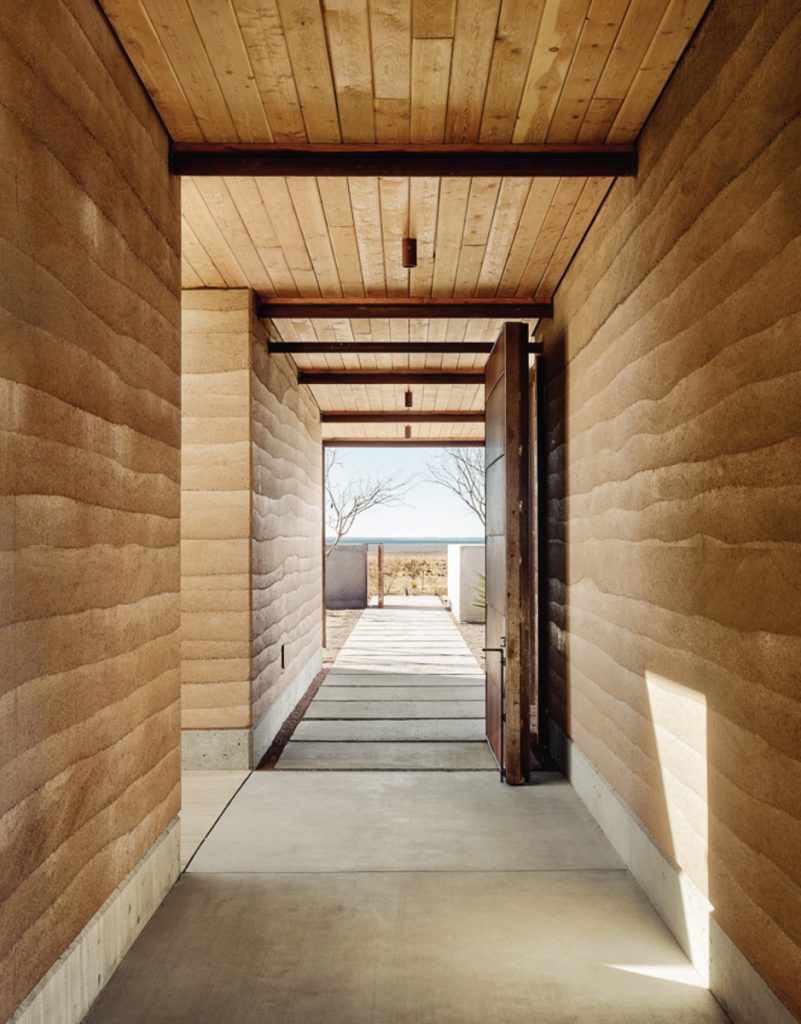
Photo: Lake Flato Architects
Why Does Biophilic Design Matter?
As lighting design pioneer Richard Kelly stated, we need “ambient luminescence, focal glow, and the play of brilliance” in our designs. The play of brilliance—or sparkle—occurs when a person turns a corner and sees something magical that reconnects them to nature. At its root, this is biophilia and a powerful way to create awe in our lighting designs and architectural habitats. By engaging with light, we can create safe, comfortable spaces rather than simply illuminating them.
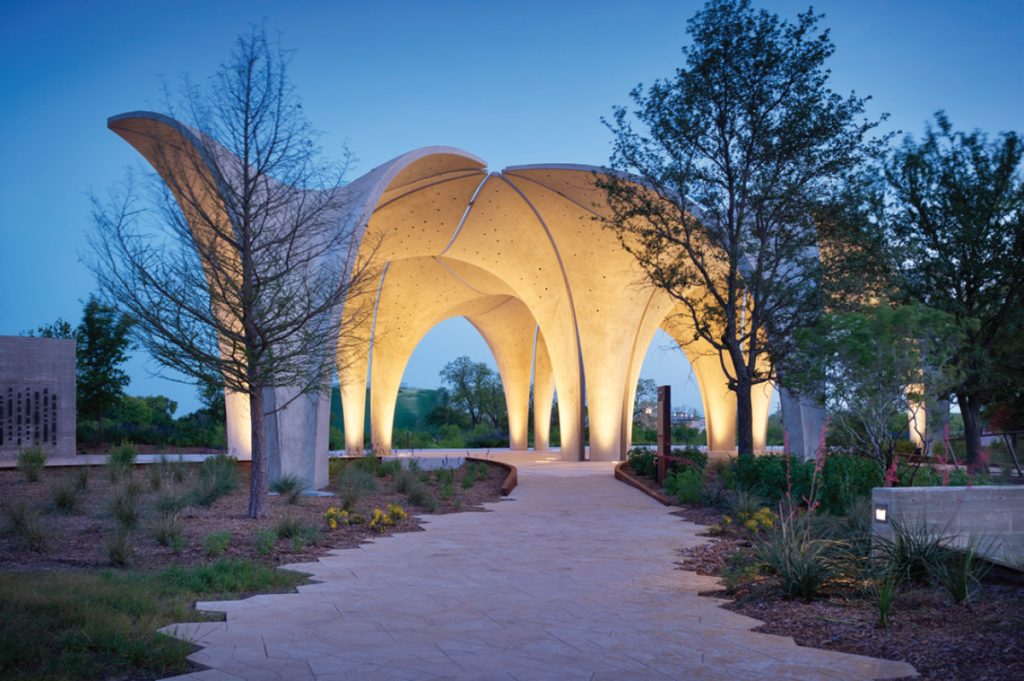
Natural light influences our sleep-wake cycles and regulates hormones like cortisol, serotonin, and melatonin, which are vital for overall health. The circadian rhythm controls many bodily functions, including those that support recovery during sleep.
Advances in lighting and controls technology now allow the design community to tailor lighting systems to individual needs, even customizing equipment and spectra of light. Coordinating other devices, equipment, monitors, windows, and even staff schedules can conflict with lighting design and should be coordinated with the design team throughout the project.
In architectural design, it’s critical to consider how individuals experience light, as factors like age, eye health, and light sensitivity can affect perception. For instance, conditions such as cataracts can alter how light is perceived, and what may seem like inadequate lighting might be related to an individual’s vision, not their surroundings. When thinking about a person’s immediate habitat and safety, an understanding of the eye and light-level needs are crucial in design.
Incorporating Biophilic Lighting Into Everyday Spaces
When setting up our home offices, we came to the realization that a direct connection to nature is essential for well-being. Initially, lightwells and electric lighting seemed sufficient, but experiencing the outdoors—birds on the fence, trees moving in the wind, and seasonal changes—proved invaluable.
To support focus and reduce eye strain, we take regular 20-20-20 micro-breaks, looking at something 20 ft away for about 20 seconds, every 20 minutes. This simple habit is easier when desks are positioned facing or perpendicular to a window. Being near natural light also allows us to observe shifting weather patterns and feel the warmth of the sun throughout the day. In the evenings, adjusting indoor lighting to a softer, warmer glow creates a more relaxing atmosphere. By making these small adjustments, we’ve improved focus, reduced fatigue, and found a greater sense of connection and joy in our workdays.
Enhance Sensory Experiences
The time of day and natural light movement are key considerations in biophilic lighting design. Beyond static sunlight, incorporating dynamic layers of light, patterns, and reflections can create a more natural and engaging environment. Lighting controls are integral and allow designers to enhance sensory experiences.
Incorporating a sensory experience into design goes beyond adding a plant or custom light fixture; it’s about observing growth and experiencing the time of day through light. Light intensity is not always the focus—diffused light, like moonlight, plays a role in how we feel and connect with nature, at an evolutionary level.
THE AUTHORS
- Nicole Craanen, NCIDQ, WELL-AP, LEED-Green Associate, ANFT Nature and Forest Therapy Guide, is the founder and owner of The Biophilic Design Institute. She is committed to transforming our relationship with our environments, guiding architects and designers to integrate our innate connection with nature into core design principles.
- Lauren Schwade, LC, EDAC, Member IES, IALD, is associate principal and the Healthcare Lighting lead at Mazzetti, with over 18 years of expertise in the field. She is dedicated to crafting innovative, patientcentered solutions that elevate the health and wellbeing of patients, families, and healthcare staff.
References
- Leanne Martin et al., “Nature contact, nature connectedness and associations with health, wellbeing and pro-environmental behaviours,” Journal of Environmental Psychology, vol. 68, Apr. 2020.
- Catie Ryan, Bill Browning, and Dakota Walker, The Economics of Biophilia: Why Designing with Nature in Mind Makes Financial Sense, 2nd Edition, Terrapin Bright Green, 2023.
- Nikos A. Salingaros, “Fractal art and architecture reduce physiological stress,” Journal of Biourbanism, vol. 2, no. 2, 2012.
- Evan T. Sebastian, “The Complexity and Origins of the Human Eye: A Brief Study on the Anatomy, Physiology, and Origin of the Eye,” Senior Honors thesis (Liberty University, 2010).
- Dacher Keltner, Awe: The New Science of Everyday Wonder and How It Can Transform Your Life, Penguin Press, 2023.