Overview
Nearly 2 million people in the United States live in spaces of incarceration where lighting is primarily designed for surveillance rather than human health. Continuous or excessive light exposure—often far above natural nighttime conditions—disrupts sleep, circadian rhythms, and cognitive function, contributing to long-term physical and psychological harm.
Trauma-informed design principles show that sensory conditions directly influence stress regulation, recovery, and behavior, highlighting core needs for control, predictability, and sensory modulation. When environments lack these qualities, chronic sensory dysregulation—through constant illumination, noise, or deprivation—reinforces trauma and prolongs physiological stress.
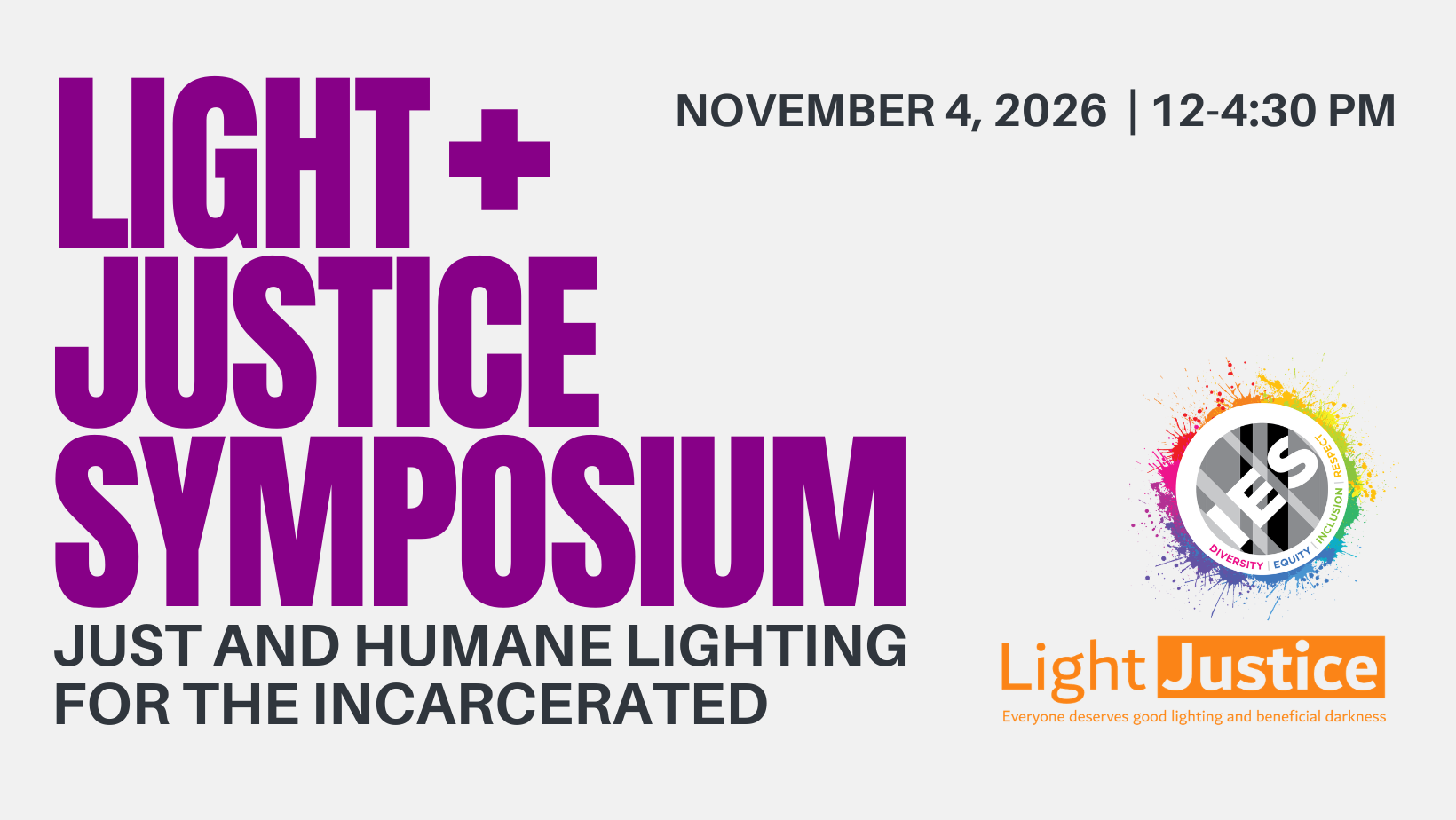
This symposium connects these critical findings to the Light Justice framework, positioning light and darkness as designed, time-based conditions essential to neurological recovery. Moving beyond traditional lighting engineering, this event brings together lived experience, environmental psychology, correctional leadership, advocacy, architecture, and lighting manufacturing to reframe light from a tool of control into an instrument of care.
Sessions curated to cover:
- Trauma-Informed Design (TID): Environmental control, predictability, and sensory modulation.
- Sensory Dysregulation: Overstimulation vs. deprivation in institutional spaces.
- Health & Chronobiology: Circadian disruption, amber light integration, and restorative sleep.
- Policy & Standards: ACA guidelines, IES recommended practices, and institutional regulations.
- Application Strategies: Security fixture retrofitting, manufacturer research, and daylight access.