
Empowering African refugee communities and informal settlements
Imagine a world without artificial light. How might that feel when the Sun goes down? For refugees across Africa, this is not something they have to imagine; it’s their reality.
A lack of public lighting has resulted in a vast impact on those who have learned to live without it. At worst, it risks their physical safety, leaving them vulnerable, for example, when walking as far as the length of a football field in darkness to use a public bathroom.
Illumination, taken for granted by most, is empowering. It enables work and commerce, provides a public space for children to study and socialize in the evening, and importantly, creates an enhanced feeling of security.
For African refugees—many of whom make their homes from grass compressed with mud, tree branches, four wood pillars, and clay—displacement should not mean darkness, said Alain Harelimana, managing director of SOLEKTRA Rwanda, a leading provider of renewable clean energy solutions. “I grew up in a rural area of Rwanda that didn’t have access to electricity, so I know what it means to bring public lighting to a community.”
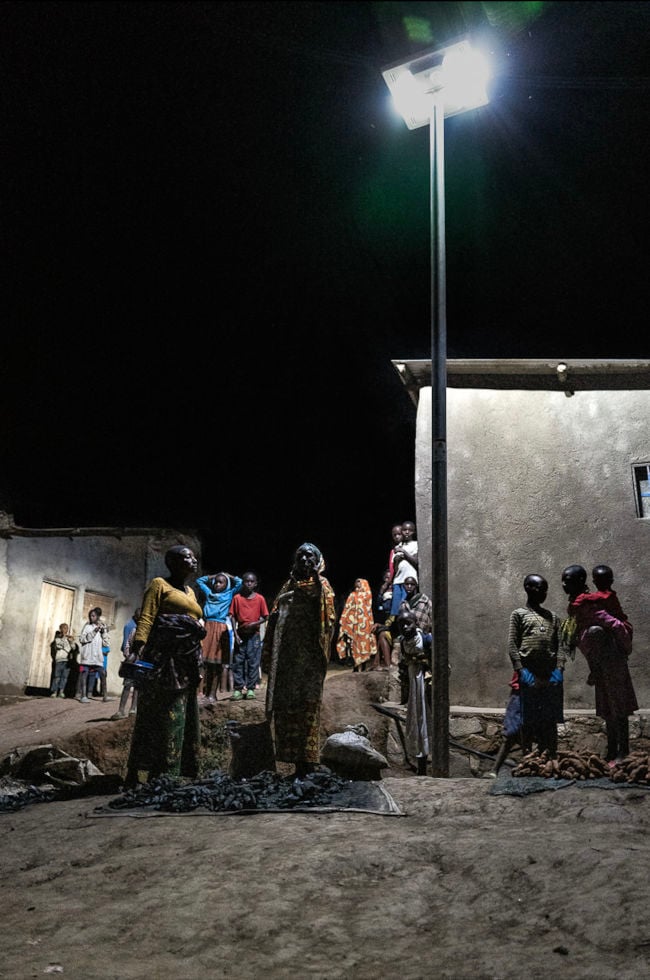
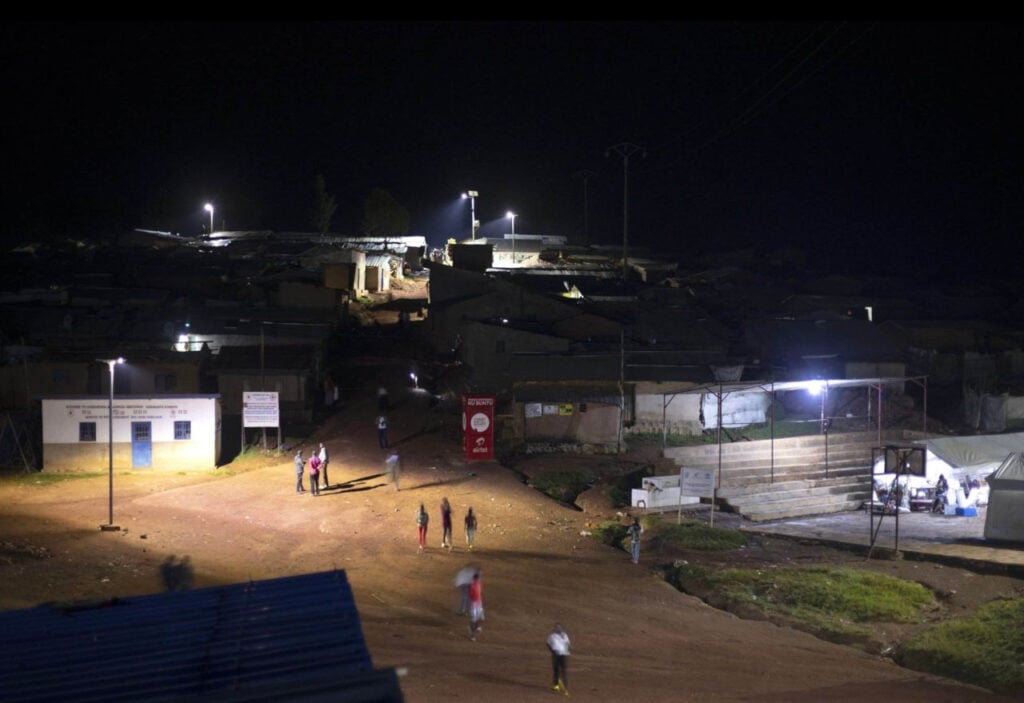
Over six months in 2019, SOLEKTRA installed 185 solar streetlights across three refugee communities in Rwanda, bringing light to the densely populated camps of Nyabiheke, Kigeme, and Gihembe. The camps, which mostly went dark after sunset, serve approximately 50,000 residents. The communities function like small towns, some accessible only by dirt roads and many about the size of New York City’s Central Park. In this region, camps are typically spread across a hill and have circulation routes, markets, communal spaces, clinics, and schools. The primary form of transportation is walking, followed by bicycling, bicycle taxis, modern motorcycles, and shared taxis with the nearest town business center located 5 to 6 miles away.
While the Gihembe camp closed in October 2021, the project expanded to an additional 815 solar streetlights across all five refugee camps as well as the additional Mahama, Kiziba, and Mugombwa settlements. Once completed, the transformation and community impact was immediate.
“Markets stayed open longer, children studied under light, families moved safely after sunset,” Harelimana said. “Residents described the change by saying the camps felt like Kigali [the capital city of Rwanda] at night—lit, active, and alive. Light changes behavior. People reclaim space.”
Harelimana emphasized that the project was made possible due to the inclusive national electrification strategy of the Government of Rwanda and reflects a coordinated commitment and implementation among government, humanitarian agencies, and private-sector groups. “We are deeply grateful to Practical Action and UNHCR [United Nations High Commissioner for Refugees] for their leadership and partnership,” he said, adding that the Ministry in charge of Emergency Management plays a central role in coordinating refugee affairs and ensuring that infrastructure interventions align with protection, safety, and resilience objectives.
Introducing Successful Standalone Systems
The design philosophy for the installation of solar streetlights focused on human movement patterns, with lighting placed along key circulation routes to clinics, water points, markets, communal areas, and sanitation facilities. The primary objective was uniform pedestrian visibility and orientation, not architectural aesthetics. “We designed for behavior, not just brightness, Harelimana explained. “In humanitarian environments, lighting must prioritize safety, durability, and ease of maintenance.”
The team deployed the use of Maxi Road and ISSL+ integrated solar street lighting systems from Sunna Design. The systems were chosen for long life-cycle performance and low maintenance, according to Harelimana, who added that in refugee camps, simplicity in innovation and reliability matters more than complexity.
These standalone outdoor solar systems incorporate high-efficiency monocrystalline photovoltaic panels paired with lithium battery storage to support reliable, off-grid operation. Automatic dusk-to-dawn controls enable autonomous nightly operation, while low-wattage, high-lumen LED modules deliver energy-efficient illumination. To address security and durability concerns, the systems feature tamper-resistant battery enclosures and are engineered to provide illuminance levels suitable for safe pedestrian visibility, in line with international outdoor lighting practices.
Installation, however, presented a range of site-specific challenges. Soil conditions varied across the project area, complicating decisions around pole foundation depth and anchoring. Persistent dust exposure posed an additional concern for equipment longevity, while construction activities had to be carefully coordinated within active residential corridors to minimize disruption. Vandalism protection also remained a key consideration throughout deployment, influencing both system design and installation strategy.
“The most significant challenge in humanitarian energy projects is sustainability,” Harelimana noted. To that end, the teams employed the help of youth from the camps to monitor the lights and provide performance reports, with committees formed to oversee daily operations. These local teams were trained to perform basic diagnostics, panel cleaning, and minor adjustments, fostering accountability and ownership, which Harelimana cited as key reasons for the project’s success.
Capital Gains
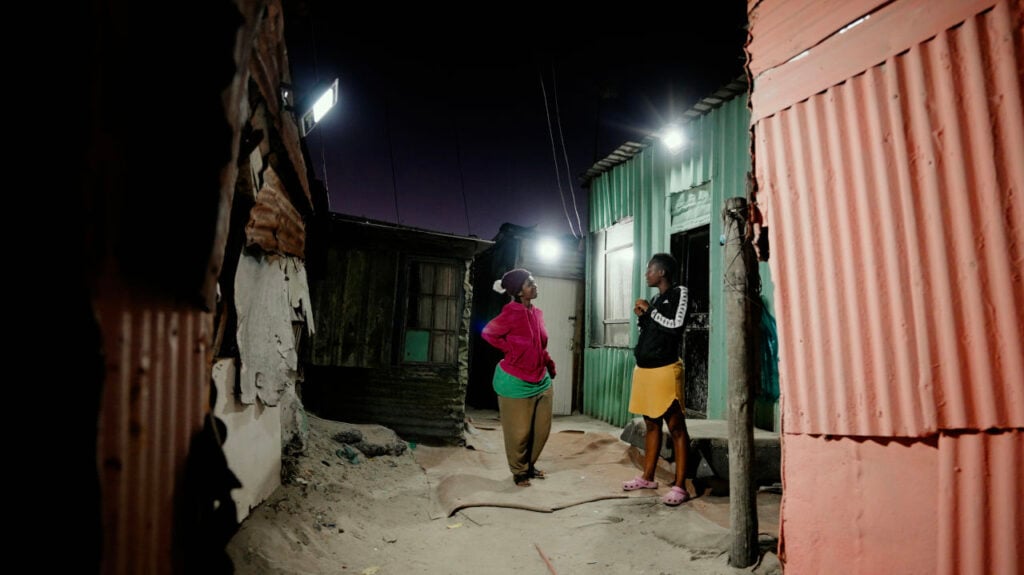
At the southern edge of Cape Town, South Africa, architect and urban researcher Stephanie Briers has spent years examining how the absence of basic infrastructure reinforces inequality—and how thoughtfully applied light can help undo it. In Khayelitsha, an apartheid-planned township that contains a mix of formal housing and informal settlements, her work confronts not only physical darkness but the social and spatial barriers it creates, using light as a catalyst for safety, dignity, and belonging.
Briers, author of Infrastructures of Freedom, is co-founder of the LightUp program, which stems from a joint doctoral research project where she developed the concept of wall-mounted solar lighting for informal settlements. “Everyday life in ‘informal settlements’ or self-built communities in Cape Town and across the globe is challenging, from meeting one’s basic sanitation needs to accessing opportunities and living a dignified life,” Briers wrote.1 “Darkness is an everyday feature that contributes to and exacerbates daily struggles. Nightlife is shaped by fear that prevents people from venturing out to meet even their most basic needs.”
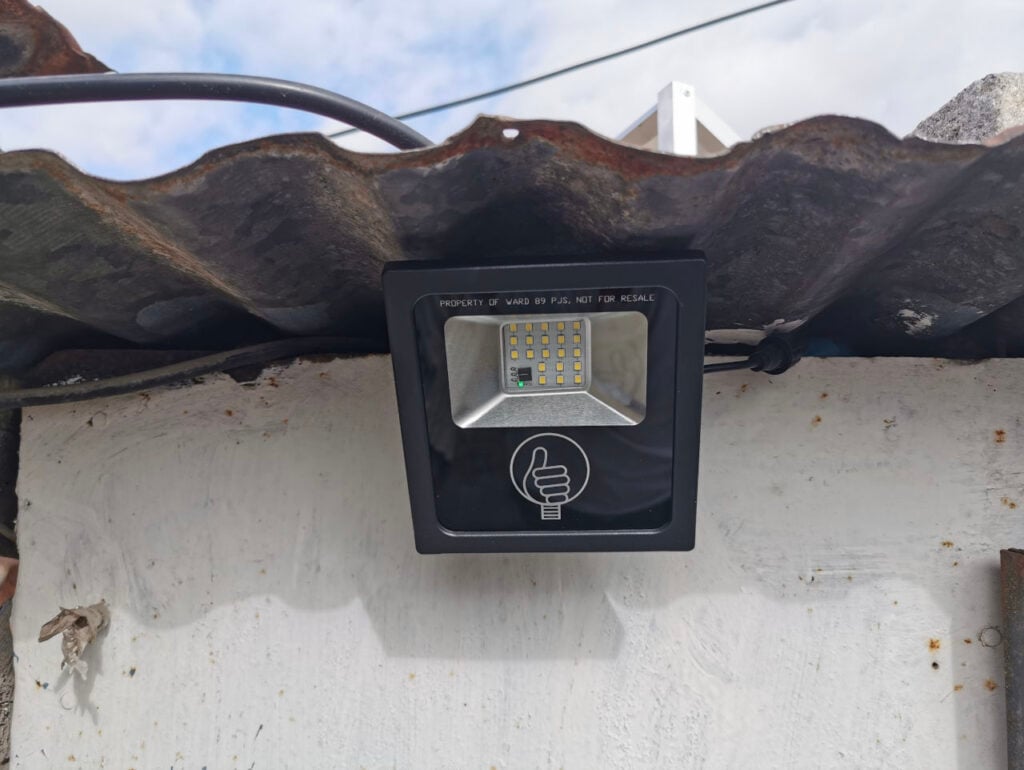
From 2018 to 2021, Briers began the first solar lighting project in the PJS Informal Settlement located in Khayelitsha. This area includes 768 households made up of self-built homes, most of which are single-story structures primarily constructed from corrugated iron sheets. Established in the 1980s, one dirt road runs through the community.
Like the camps in Rwanda, the lack of proper public lighting posed a safety risk to residents, particularly women and children, when trying to access public toilets, taps, and transportation after dark. Furthermore, residents work in many different areas and have long commutes to the Cape Town city center, for example, requiring them to both leave for work and arrive home in the dark.
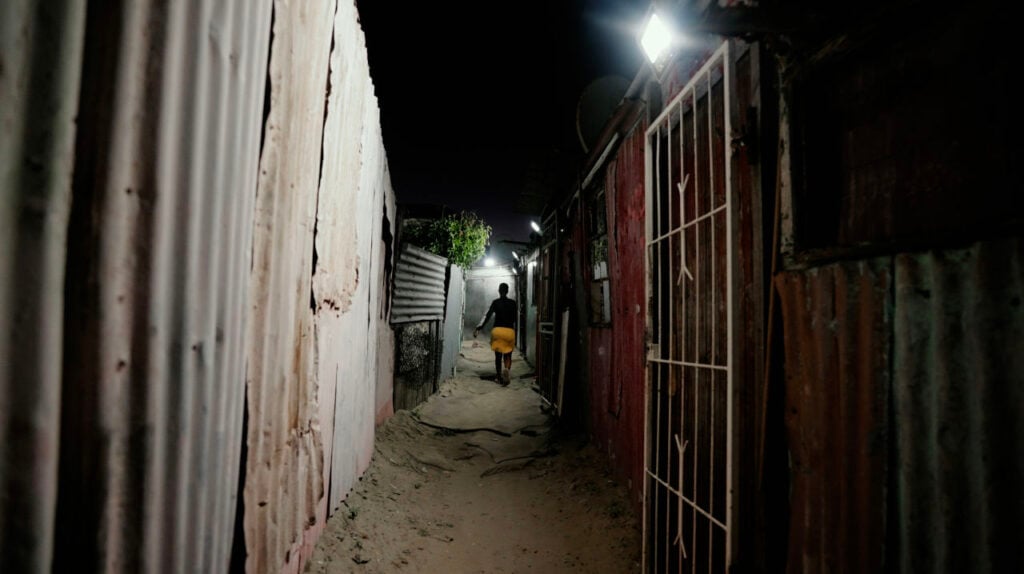
Prior to the project, high mast lighting in the camp cast “very dark shadows…making it challenging to see even though there was lighting in the area,” Briers said. “This is because of the very narrow pathways, where light from high-mast lighting cannot shine into pathways.”
The solution came by way of wall-mounted LED solar fixtures on household structures to address the darkness of narrow pathways where there is not adequate space for conventional streetlights. The solar lights are mounted near front doors of homes to bring light to where it is most important. The design ensures that the batteries are preserved so the light still shines for morning commuters.
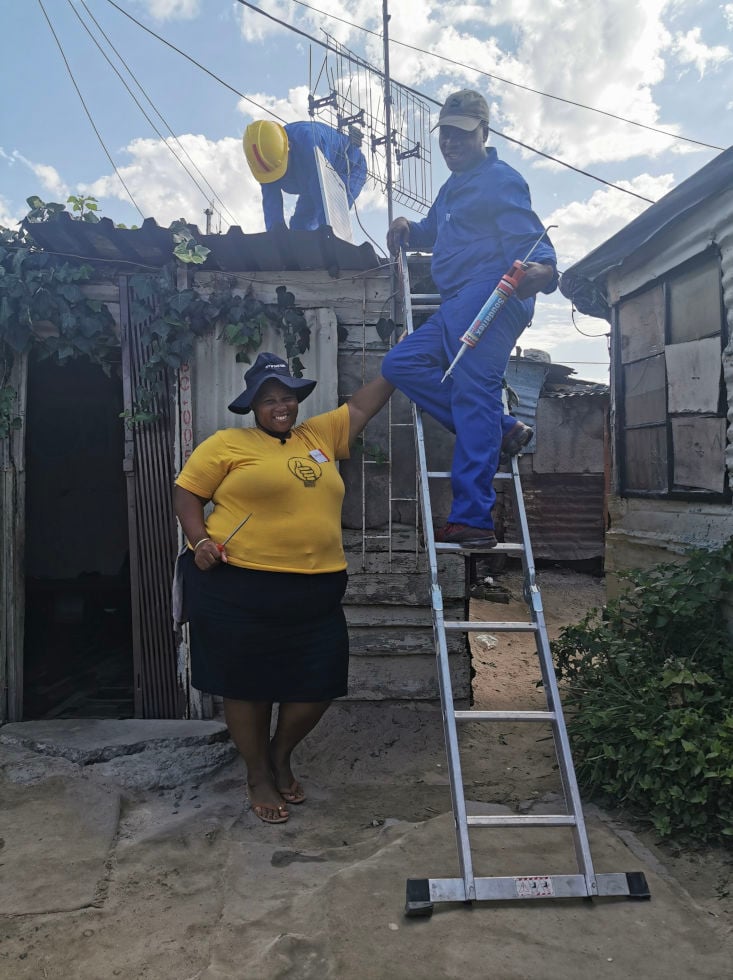
Each light is accompanied by a solar panel mounted on rooftops. The technology was custom-designed for informal settlement conditions, with batteries that are easily replaceable, advanced weather proofing, and secure installation systems to deter theft.
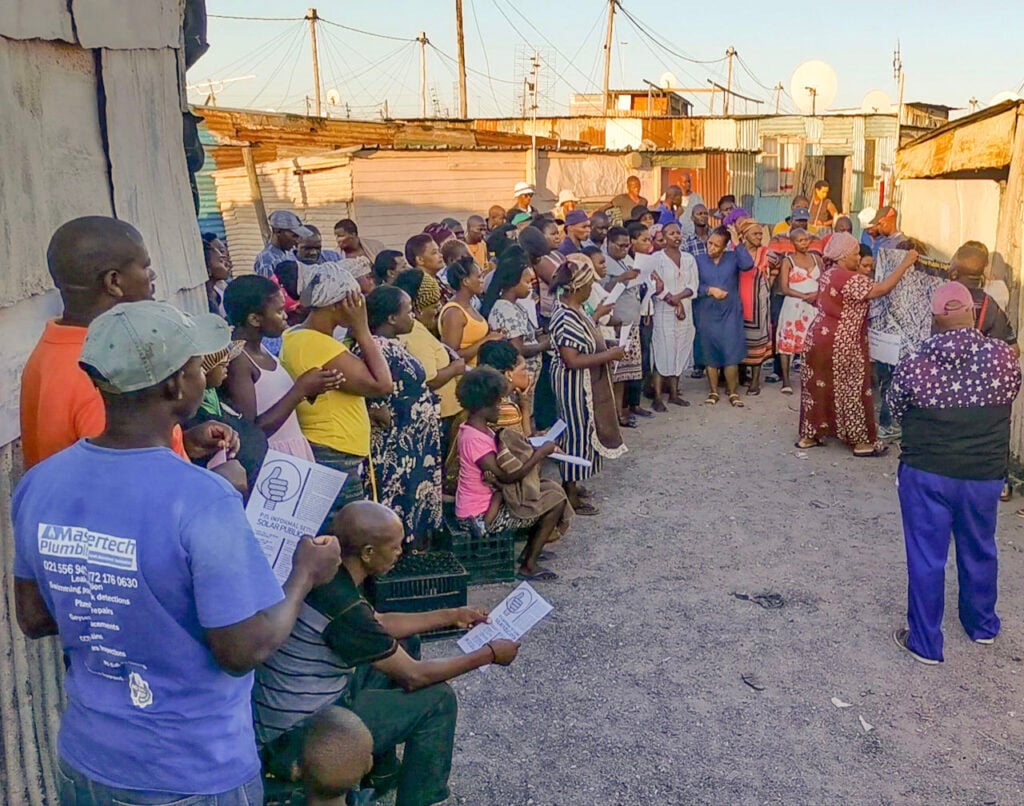
“More important was the community-driven approach we used, where community members were deeply involved throughout the project and were trained to install and maintain the lighting,” Briers explained. “Such deep community involvement ensured that the lighting is well taken care of by the community and that the lighting also serves the community needs.”
Briers said Khayelitsha was chosen specifically because of its history of apartheid planning to show how inequality still exists. “We also chose it because the NGO we worked with had a good relationship with the leadership in this informal settlement” Briers noted. “It’s important that we have strong relationships with the leaders in these communities and that there’s a willingness to work together because of the community driven approach.” This approach has been paramount to the project and something the team is pushing at a policy level in all its projects, she added.
“It’s not just about the technical infrastructure, it’s also about the process that you follow in implementing that infrastructure—in designing it, in maintaining and installing it—and that is probably the major reason for the success of the project,” Briers said.
Once the lighting was installed, it provided a feeling of freedom and empowerment to venture outdoors at night with the ability to recognize people in the streets. This was particularly important as it enabled residents to identify perpetrators and report crimes to the police, which previously was not possible.
“People kept saying how free they feel,” Briers said. “That’s what became of the title of my book…how can we then think of that sense of infrastructure as giving people a sense of freedom and that sense of citizenship that for so many years was denied in apartheid in South Africa.”
Reference
- Stephanie Briers, Infrastructures of Freedom. Berlin: Jovis, 2023.