

The Učka Tunnel in Croatia unites steel, stone, and sea
To venture into or out of the Istrian Peninsula in Croatia, a deeply historic region turned popular vacation destination known for its culinary excellence and proximity to the Adriatic Sea, travelers must pass through the Učka mountains by vehicle. Snow-capped and primarily limestone, the mountain range is unique for the abundant vegetation on its seaward side and is home to nature reserves and peaks as high as 1,396 meters (~4,580 ft) above sea level. The new, second tube of the tunnel, completed in 2024, takes visitors from earthy terrain to the coastline and passes through Mount Učka; the underground excavation spans approximately 6.5 kilometers (~4 miles), with transverse connecting passages included in its total length.
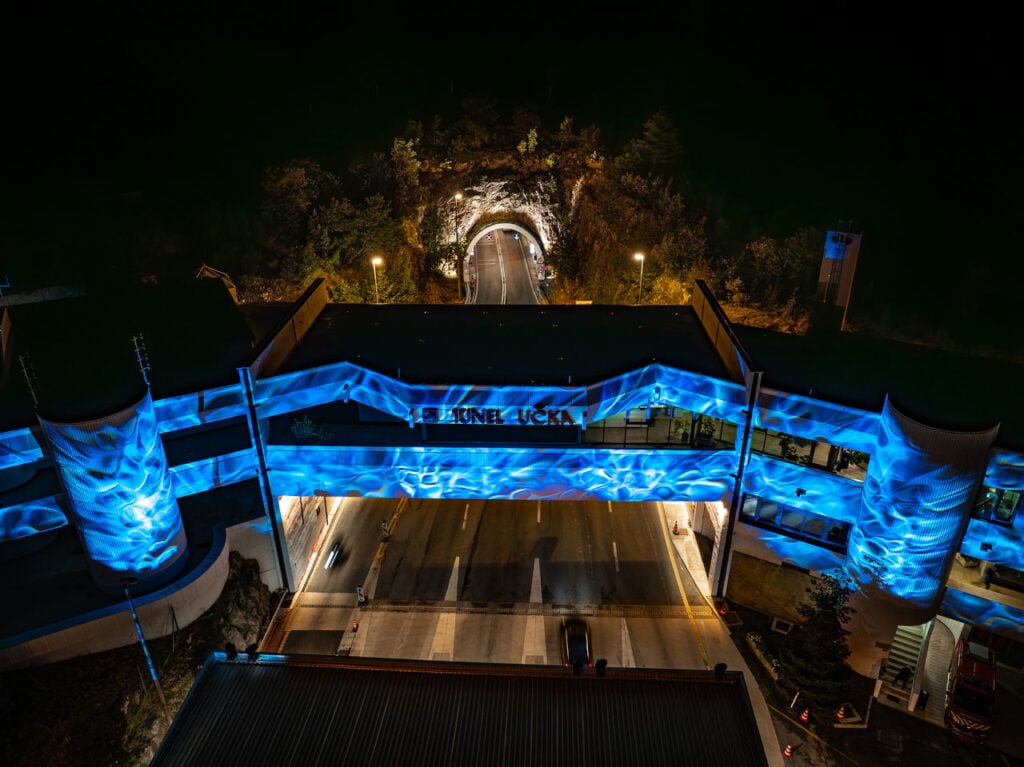
At one end of the traffic connection, voyagers are met with a Corten-steel structure conceived as a contemporary interpretation of the Istrian landscape and at the other, an administrative and control building adorned with regional weather-inspired light projections. “Even a tunnel entrance can become an emotional experience,” said Skira Architectural Lighting Principal Designer Dean Skira. “Millions of people will pass through this place over the coming years. Some may not consciously analyze the lighting, the Corten steel, or the projections, but they will feel that this is not an ordinary entrance. It is a moment of passage. That is what lighting can do when it is treated not as decoration, but as part of the meaning of a place.”
Skira’s firm won the bid for the tunnel’s decorative and architectural lighting design for both egress points because its proposal “did not treat the tunnel entrances only as infrastructure, but as places of arrival, identity, and memory,” explained Skira. “It’s rare for a lighting designer to design the architectural or sculptural element that will later be illuminated, but I have done this on several projects…For me, light often begins before the fixture. If I see it fit, I’m willing to propose what no one asked me to. To my surprise, in every case, it was accepted even if I was aware that taking that risk may scare the investor.” In this case, the risk resulted in a cultural landmark of a reward.
By Land and Sea
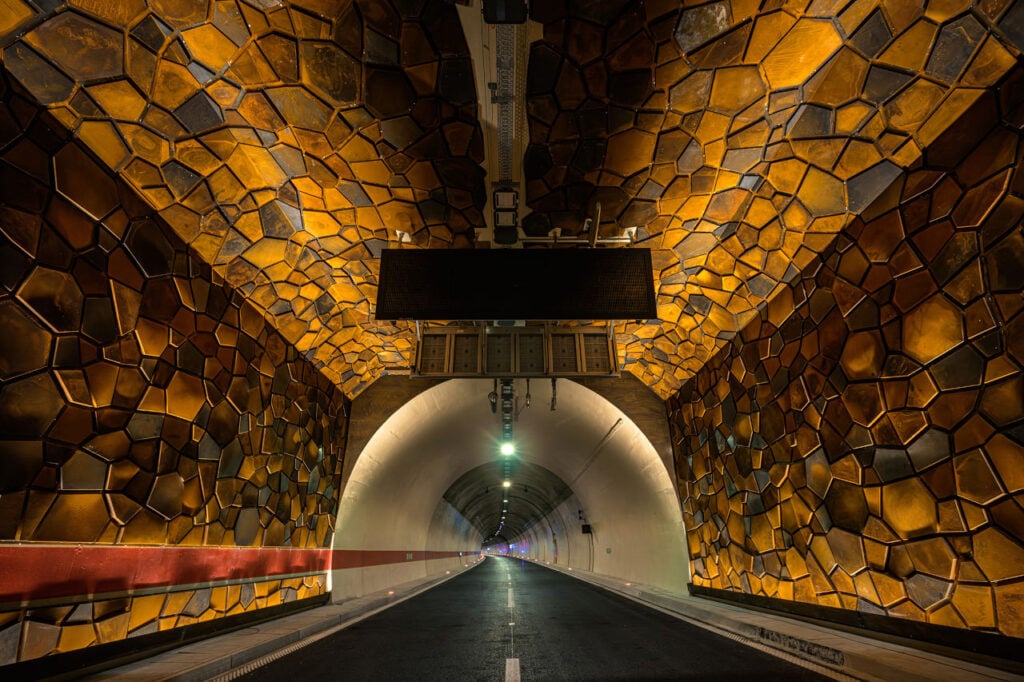
Istria is known for its terra rosa, rich terracotta-colored soil that adds a special flair to the regional wine, and the Corten steel tunnel entrance celebrates this local element. Comprising 11,000 pieces of differently shaped and sized steel, the architectural metal-and-stone structure creates a sense of movement and recalls the motif of geological layers, as if parts of the mountain side have been exposed over time. Highlighted with horizontal linear lighting, the team selected “iGuzzini Linealuce fixtures to reinforce the architectural rhythm and reveal the materiality of the stone and steel without overpowering them,” said Skira. The project intentionally features warm illumination on its land side to complement the earthy tones, while cooler illumination connects to the other entrance, nearer to the sea.
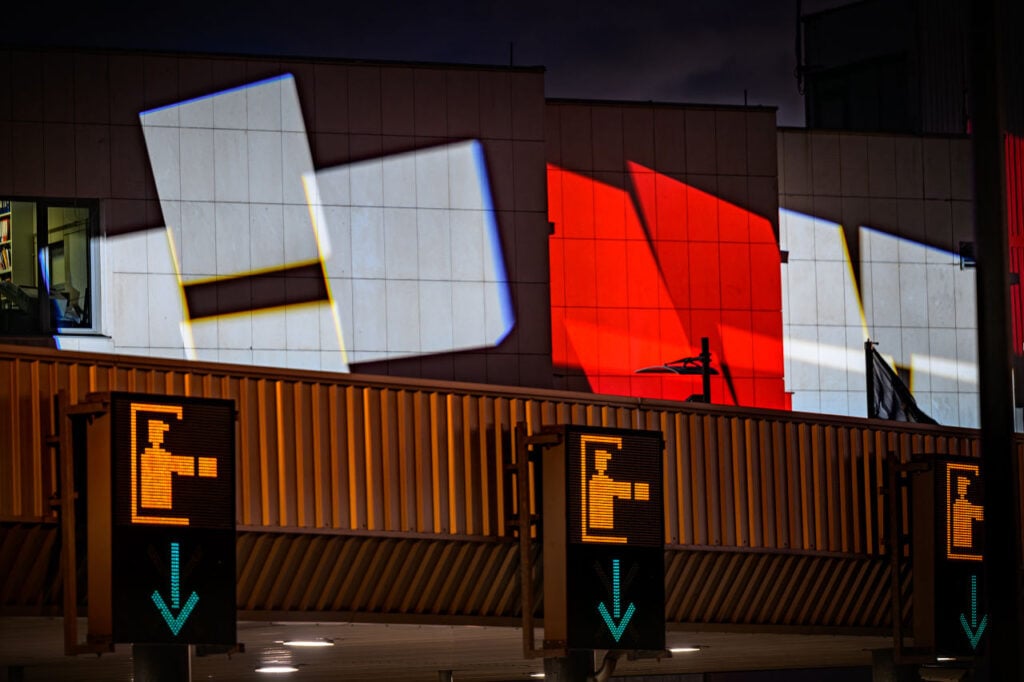
The lighting design on the administrative and control building reflects the region’s oceanic and weather-related elements, such as the renowned Bura and Jugo winds—cold northern and warm southern coastal winds said to influence moods and health in local folklore. ERA 700 projectors by Martin Lighting along with custom gobos are used to create the dynamic scenes of moving seawater, snowflakes, and wind as well as the recognizable checkered flag of Croatia. “These are not decorative effects in the superficial sense,” said Skira. “They are fragments of the local climate translated into light.”
Normally running in the evening until midnight during warm months or 10 p.m. in the winter, the projections are preprogrammed to respect the surrounding environment. While some scenarios automatically follow the seasons, others (such as snowflakes or wind imagery) can be manually selected via a touchscreen in the control room. Should a special scene be manually selected for use one evening, the lighting system is programmed to automatically return to its seasonal sequence the following night. Additionally, the projection system is built for change: extra cultural scenes can be added in the future.
A Strong, Controlled Identity
With lighting controls by Lutron on the land side and controls by Pharos on the sea side, the €400,000 ($465,076) project—including the decorative lighting, electrical installation, controls, and Corten-steel sculpture, and excluding the other components of the infrastructure investment of the second tunnel tube—caters to the specific technical requirements of both entryway locations. Because the firm oversaw decorative and architectural elements, tunnel safety lighting and roadway lighting requirements were outside of its direct responsibility. Instead, Skira explained, “the main environmental consideration for our scope was compliance with Croatian regulations related to light pollution. This was especially important because the project is in a sensitive landscape. Our intention was to create a strong visual identity while avoiding unnecessary upward light, glare, and uncontrolled spill light.” Declared Učka Nature Park in 1999, the area preserves wildlife and plant life in forests, meadows, and rural landscapes. As a result, the team spent many nights onsite testing, focusing, programming, and simulating the scenes to ensure the precision of the illumination and overall visual effects.
When asked about the culmination of the IES Illumination Award of Merit-earning project and its success, Skira cited the importance of the trust the project’s investor granted his firm. “Bina Istra gave us the freedom to go beyond a conventional lighting solution and to propose something more ambitious: a combination of infrastructure, art, landscape, technology, and cultural identity.”
The Designers
- Dean Skira, Member IES, is the principal designer of Skira Architectural Lighting.
- Dean Matika served as part of the engineering team on the project.
- Antonio Osip served as part of the engineering and coordination team on the project.
- Godvin Poropat served as part of the engineering team on the project.
- Božidar Pustijanac served as part of the 3-D visualization, simulation, and focusing/programming support on the project.