

Seven IES past presidents reflect on a century-plus of lighting leadership
While the U.S. is set to toast its semi-quincentennial birthday next month, the IES is blowing out its own set of candles—120 of them, to be exact. For an organization that arrived on the scene before the Ford Model T, the FBI, the Erector Set, and even the beloved Reese’s Peanut Butter Cups, that’s a lot of history to illuminate. Too much, in fact, for a single magazine article. Instead, to honor this anniversary, LD+A turns to the guiding voices of the Society in recent decades: seven IES past presidents who have gathered their insights on how the organization has shaped the lighting community as well as how its legacy continues to evolve.
An Education Authority
By Chip Israel
Since its inception, the IES has been dedicated to the development of intellectual information and then the dissemination of those findings. That is the definition of education. From gas to electric lighting, only the technology changes faster than our applications.
For over a century, the IES has educated its membership directly and the design community indirectly. Initially, our members worked in a traditional office where written publications were how information was shared. Companies recognized the value of IES Membership, which provides access to this information. Intellectually, conferences are where thought leaders were brought together to both share and challenge ideas. Presentations, whitepaper reviews, and technical committee meetings were all ways that information was shared. Fast forward to today—post COVID-19—and staff members are now working remotely, everyone is challenged by time constraints, and many new designers feel that they can learn everything in a video. Information and education are expectations, and now it must be instantaneous.
Over the span of my career, lighting technology and our working methods have transformed at a staggering pace. In the 1980s, when I entered the profession, lighting designers depended on just a handful of core documents: the IES Lighting Handbook, RP-6 for sports facilities, RP-8 for roadway and parking applications, and RP-1 for offices.
But technological progress soon revealed new challenges. Dark walls, for example, led Society committees to conduct research, create new glare metrics, and share those insights widely. Other concerns—like flicker and emerging dimming protocols—also demanded guidance.
The arrival of LEDs accelerated everything. Early LED products, often housed in basic white boxes with plastic lenses, reintroduced the same glare problems we thought we had solved. Performance expectations, lamp output, and LED CRI all became urgent discussion points. In response, the IES moved quickly to develop foundational documents such as LM-79, LM-80, TM-21, and later TM-30, delivering much-needed education in remarkably short timeframes.
LEDs seem to have stabilized, but there is a continual need for more technical information. How do we use all these tools, like circadian, tunable white, and warm dims? Many articles and seminars discuss the well-being and positive benefits of improved lighting, and as a leader in education, the IES has hosted numerous symposiums on this and other topics.
Visibility is the key to education. Members, the design community, and the public all need access to this wealth of information and experience. The IES offers choices. Along with its in-person offerings, the IES provides a wealth of information digitally, and many sections offer remote access to monthly meetings. At the same time, the IES also presents technical and topical webinars, all of which are accessible whether attendees reside in a large city or remote town.
As lighting education continues shifting toward e-learning, the IES Portal provides instant access to essential resources and opportunities to earn CEU credits. This is the most powerful tool available to designers, manufacturers, and end users. A few clicks on a keyboard can return thousands of technical documents, webinars, townhalls, and industry news.
As time passes, lighting topics and needs change, as does the way we deliver information. But one thing has not wavered: that education has always been—and will continue to be—the foundation of the IES.
Chip Israel, Fellow IES, Fellow IALD, CLD, LEED-AP, LC, is the founder of Lighting Design Alliance, a Salas O’Brien Company, and an IES Louis B. Marks Award recipient. He served as IES president from 2012 to 2013.
Publications Excellence
By Frank Agraz
On January 10, 1906, at the Hotel Astor in New York City, a meeting was convened “to complete the formation of a society devoted to the Science and Art of Illumination.” Its mission was to improve the lighted environment by bringing together those with lighting knowledge and by translating that knowledge into actions that benefit the public. Since its inception, the IES has authored many significant publications in pursuit of fulfilling its charter.
The Society began publishing immediately. Volume 1, number 1 of Transactions of the Illuminating Engineering Society appeared in February 1906. During the 11 months of its first publication year, the Society printed more than 400 pages of technical presentations and discussions dealing with all aspects of lighting.
In 1910, the Course of Lectures on Illuminating Engineering was given at Johns Hopkins University under the joint auspices of the university and the IES. The IES Council’s statement explained, “The Illuminating Engineering Society recognizing the fact that there is an increasing demand for trained illuminating engineers, and that the present facilities available for the specialized instruction required are inadequate, determined, through an act of the Council of the Society, to encourage the establishment of a course of lectures on the subject of illuminating engineering.” The lectures were attended by 240 men from various parts of the U.S., many of them representatives of technical schools, gas and electric central stations, and manufacturing companies.
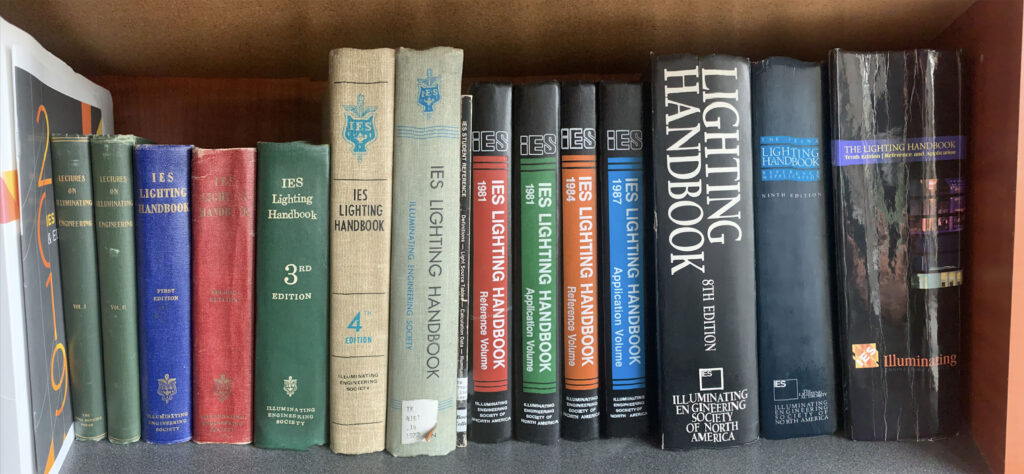
In 1947, the first IES Lighting Handbook was published. Until then, recent publications included a monthly Illuminating Journal, current practice documents, lighting data sheets, study aids, and various reports. The IES Lighting Handbook’s preface stated, “For one person to collect and digest the findings of the past halfcentury of progress would require a lifetime of research. Nevertheless, an understanding of the basic technical information and of time-tested application techniques is recognized as the best foundation for further advancement…In simple terms and highly condensed style, the IES Lighting Handbook places conveniently within reach of all its readers the accumulated knowledge of the past 41 years of lighting progress, evaluated and interpreted with respect to today’s needs by a highly qualified group of over 100 contributing specialists, engineers, architects, physicists, decorators, artists, and ophthalmologists who have worked for more than two years under the direction of a special committee of the Society and a full-time editorial staff to provide the most complete coverage of the field possible within the limits of a conveniently-sized volume.”
In the span of 64 years, the IES published 10 hardcover Handbooks. The 2011 10th edition reference and application manual weighed in at 10 pounds and spanned 1,328 pages. Although the authors effectively framed the contents around the latest Recommended Practice and other standards documents, lighting technology advancements were evolving faster than its volunteer committees could publish formal updates. With the advent of white LEDs becoming commercially viable and the lighting community demanding more timely guidance, the IES found a way to improve information access and reduce time between document updates.
In 2020, the IES launched the Lighting Library, a newly formulated online five-collection series of IES standards that updates, expands, and replaces the 2011 Lighting Handbook and all previous versions. Content within the library has been vetted by an ANSI-approved IES consensus process. IES committees are now affirming and updating lighting standards with greater frequency. Subscribers have access to all versions of a standard and receive automatic notifications of updates and revisions.
LD+A, the official magazine of the IES, is written for professionals involved in the art, science, study, manufacture, teaching, and implementation of lighting. First published in July 1971, LD+A continues to inspire IES Members through its quality writing and award-winning articles. When the IES periodically polls its members on the value of membership, “receiving a monthly copy of LD+A” always hovers at the top of the list.
LEUKOS: The Journal of the Illuminating Engineering Society is an online, quarterly resource published by Taylor and Francis on behalf of the IES. LEUKOS is an international venue for technical developments, scientific discoveries, and experimental results of current interest or lasting importance in the applied use of light. Topics of interest include visual and non-visual responses to optical radiation; all aspects of the technologies employed in the generation, control, measurement, and computation of light and color; the lighting design of interior and exterior environments; and cross-cutting topics that include daylighting, energy management, economics, and sustainability.
Frank Agraz, LC, CLMC, is ESCO solutions manager at Facility Solutions Group. He served as IES president from 2022 to 2023.
Setting Standards
By Alan Lewis
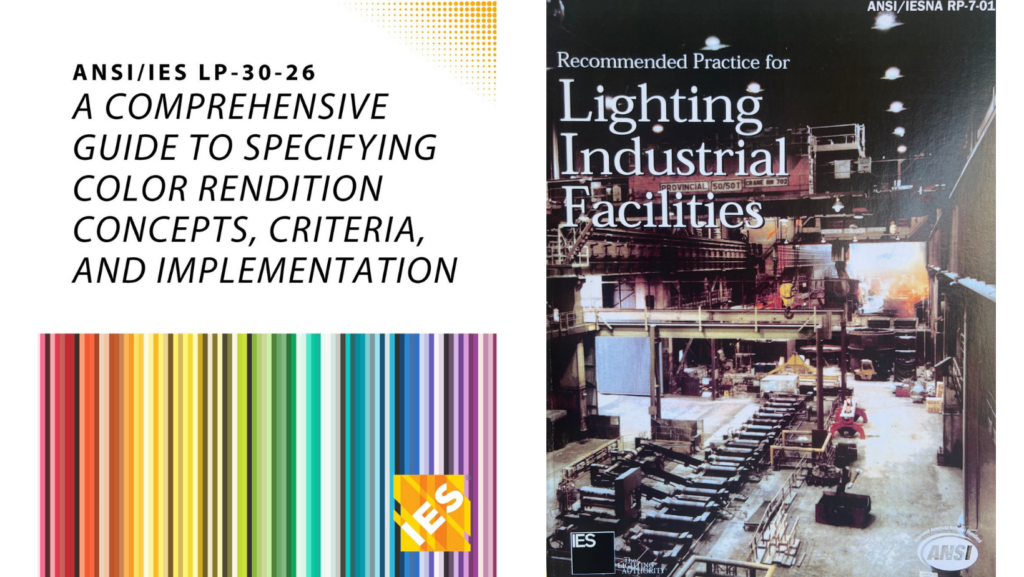
The IES is accredited by ANSI as a standards development organization for the fields of lighting and illuminating engineering. The IES currently is responsible for 128 standards ranging from airports to the visual environment (sorry, there is no “Y” or “Z”). The accrediting process includes a rigorous periodic audit by ANSI to ensure that its rules and guidelines are followed so that standards represent the views and expertise of a balanced array of stakeholders, including the public.
Technical Committees
The standards development process begins when a need is identified, usually from the members of an existing Technical Committee (TC) and often due to newly published research or changes in technology. In the Society’s infancy, there were relatively few standards, and those tended to focus on the need for commercial compatibility and a uniform terminology. But as lighting became more complex and technology expanded into areas that previously didn’t exist (e.g., solid-state electronics), the need for a greater range of industry-wide guidance became critical to address the rapidly expanding demands for information on best practices and procedures. Over the years, the composition of TCs has become increasingly specialized while also endeavoring to maintain the requirement for balanced membership. IES staff is challenged to equip the TCs with a mix of highly specialized experts and those with a broader, if less in-depth, knowledge of narrow technical subtilties.
The IES TCs, staffed entirely by volunteer members, remain at the heart of the standards process. They write the standards, vote on their adoption, and, almost immediately, move on to the next revision. They are the unsung heroes of the standards process who innovate, debate, and evolve the knowledge base in this rapidly changing group of professions.
Advisory Panels
At one time, the IES Board of Directors needed to approve nearly every publication emanating from the Society. The Board has evolved to focus more on policy and the Society’s future. It has formed three advisory panels to serve as a link between the standards-writing committees and the broader policy objectives of the Board. These advisory panels meet regularly to examine the productivity of the TCs and facilitate the translation of Board policies to Society action. The panels include both Board Members and others with a comprehensive understanding of the role of the TCs in the mission of the Society. They inform the staff of needs for changes, interventions, and successes of the TCs. There are three advisory panels that coordinate the TCs: the Science Advisory Panel, Practice Advisory Panel, and Applications Advisory Panel.
The Standards Committee
The Standards Committee was formed in recent years to provide a clearinghouse to ensure that the processes for approval of IES standards met the requirements as an ANSI standard. It comprises experienced IES Members who review the processes of every IES TC to ensure that they meet ANSI guidelines. These processes include approvals of TC Project Initiation Forms, committee votes, resolution of negative votes, and public comments. Only after all discrepancies are resolved are documents approved as standards.
Alan Lewis, O.D., Ph.D., Fellow IES, retired as president of the New England College of Optometry in 2016 and continues working as a physiological optics consultant. He served as IES president from 2005 to 2006.
Partnering with NCQLP
By Daniel G. Salinas
The IES and National Council on Qualifications for Lighting Professions (NCQLP) have always been linked by a common need for the lighting industry to find a way to expand the knowledge of one through the vehicle of certification provided by the other. Even before the NCQLP held its first test in November 1997, the IES was being pressed by its members to develop a means for evaluating a practitioner’s level of knowledge. In 1994, it was the Technical Knowledge Exam, and it showed just how many of us were looking for something that separated those who cared about the lighted environment and wanted a mechanism that legitimized that effort. Unfortunately, it was not going to be that path: It could not be something just for the design community but needed to include the lighting industry at large. The IES, IALD, GSA, and several others became sponsors of this effort, and the initial group of Lighting Certified (LC) professionals started their first three-year cycle in January 1998. I was among those first LCs and am proud to still hold that certification some 28 years later.
At first, the NCQLP included an Education Committee but had to sunset it due to a conflict with the organization’s charter restricting it from educating to the test. This allowed the IES to put together education materials to support those preparing for the test, but the bigger problem was the lack of intermediate-to-advanced education needed to support the continuing education requirements to meet the 36 LEUs per three-year cycle—classes that could not be repeated during that cycle; we were in trouble. As chair of the Recertification Committee (now Certification Renewal) my committee was bombarded by LCs that needed approved LEUs, so IES Sections jumped in to build those classes into their monthly offerings with requirements for those classes established by the NCQLP Certification Renewal Committee. It was the top issue discussed at IES District and Regional events, as well as LightFair and the IES Annual Conference, where sections could recruit speakers to come to a section or group of sections for a speakers tour. It is where ideas such as the Advanced Education Fly-in were birthed as well as section-to-section education partnering. The IES began putting out educational material related to various Recommended Practices and research that would provide CEU-level subject matter for increased education. The industry stepped in and began putting together CEU-based learning at factory training facilities, and local IES Section events requested review and approval of the material by the NCQLP. This was an important step in our industry because it forced us into something we had needed desperately for a long time: the education of our membership and our industry so it could move away from the years of “rules of thumb” and “best guessing.”
IES Members became part of the NCQLP Testing Committee, meeting twice a year to develop the base material and topics that the separate testing organization could use in the development of the NCQLP exam: material that was based on Recommended Practice, research by universities, and IES partnerships on standards with allied organizations like ASHRAE and AIA. The IES eventually created LC Study Groups to prepare applicants for the test.
We were finally serious about continuing education with a certification that sets its holder apart from the rest of the industry. A day after the 2005 IES Annual Conference in Phoenix, the IES held an Education Summit that brought together a cross-section of educators, section/Society leaders, and others to discuss the need to move forward in education and building a library of options for our members. Then, in 2008, the IES Board of Directors created the Board Knowledge Committee to assess the needs of the industry and what assets we had or didn’t have to meet that need. It accelerated the changes regarding what we needed, when it needed to be available, how it should be delivered, and where we should go with it; over the next years, that work built the foundation to what we now stand upon. In a positive way, the NCQLP LC and its requirement for continuing education was the strong part of this concern.
Today, the amount of CEU-based education is incredible, with online courses, section- and industry-based education, IES and IALD conferences, and the upcoming 2027 debut of Light + Intelligent Building North America. This opportunity in learning is for all, not just the lighting design community. It is where manufacturing learns about the needs of the lighting industry to move forward in support of sustainability, light equity, resiliency, and environmental concerns. It is where the architect and interior designer learn why light and shadow are not in opposition but work symbiotically to excite the visual cortex and provide the definition their designs were meant to present. The NCQLP and its now-stronger partnership with the IES provides an opportunity for both organizations to move ever further together.
Daniel G. Salinas, LC, is the president at Salinas Lighting Consult. He served as IES president from 2013 to 2014.
Conference Connections
By Pamela Horner
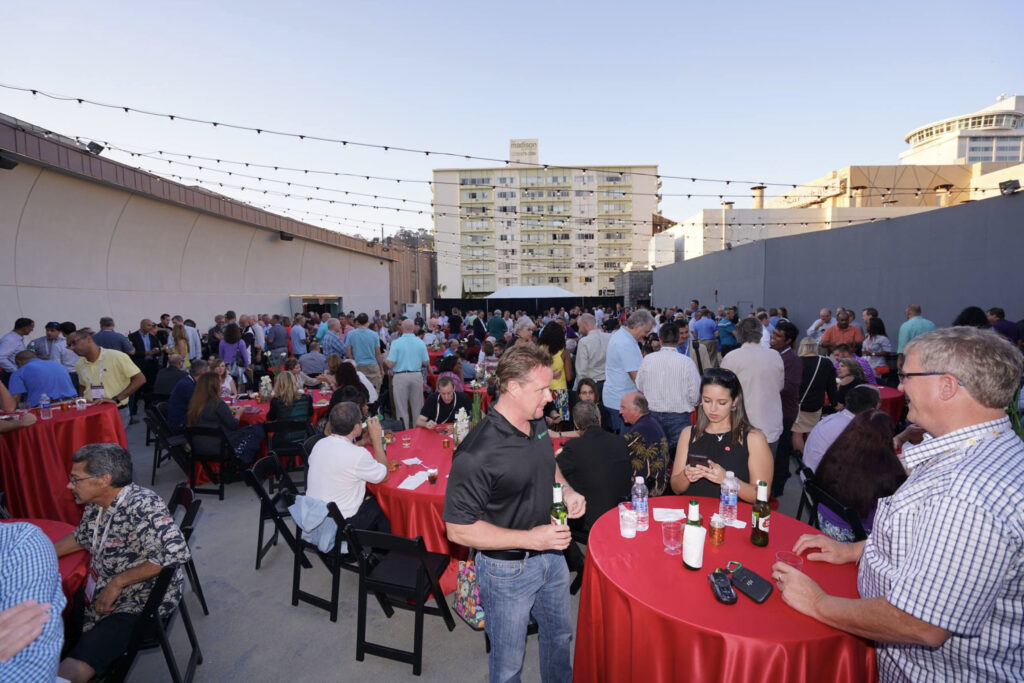
Since 1907, the IES has continually hosted annual conferences “for the presentation and discussion of technical, research, design, and application papers and reports of interest to the Society.” While this year’s annual conference is known as IES26: The Lighting Conference, the annual event was originally called the IES Annual Technical Conference, but the name was changed to IES Annual Conference in 1983, ostensibly to broaden appeal. These conferences have been held every year in various locations across the U.S. and Canada, with one exception. Understandably, in 1945, no Annual Conference was held due to World War II. There was also an anomaly in 1917, during World War I, when our history shows the typical in-person Annual Conference being replaced with a “Correspondence Convention.” If this type of convention occurred today, it would have happened via Zoom, but in 1917 the only viable methods of communication were mail, telegraph, telephone, radio, and signal flags. That pretty much left the IES with traditional mail services.
One of the reasons exact dates and places of the first 75 years of the IES Annual Conferences are known is that George J. Taylor, IES president from 1958 to 1959, meticulously documented and updated this information, tallied and typed up attendance records, and passed the information along to committees and past presidents. His records reveal some fascinating statistics for Annual Conferences from 1907 to 1981:
- New York State hosted 11 conferences; Pennsylvania: 7; Canada, Illinois, and Massachusetts: 6 each; and Ohio: 5.
- The first conference, held from July 30 to 31, 1907, included 200 attendees. The next year, that number doubled.
- The 1929 conference in Philadelphia (September 24 to 27) attracted 745 attendees, which was surprising because the 1929 stock market crash occurred a month later, ushering in The Great Depression.
- IES conference attendance remained fairly consistent, reaching a new high at the 1946 conference with 807 recorded attendees.
- From the 1940s through the mid 1960s, conference attendance ranged from 550 to 840, but those numbers likely included non-members who registered for the extra programs. It is clear from various audio tapes on file that IES Members regularly brought family members to the Annual Conference, rather like a summer vacation opportunity, where spouses and children often became lifetime friends.
- In 1969, Taylor’s records began showing attendance numbers in a fascinating way, separating “delegates” from “technical sessions only” and “ladies.” Today, we would call “delegates” those who registered for the full conference. And “ladies” would be anyone who registered for spouse or family programs. Times certainly change, as does language.
- The late 1960s was a boon for IES Annual Conference attendance, averaging nearly 1,000 attendees per year.
- By 1981, the last entry in Taylor’s log, the conference in Toronto, shows 834 attendees, including 451 delegates, 142 ladies, 43 non-members, 198 dailies, and 36 teenagers.
Centennial Conference
In 2002, an Annual Conference task force was appointed, in part because the IES Centennial Year was fast approaching. The IES Board of Directors performed expert advanced planning, which, for some years thereafter, changed the typical summer timing of the Annual Conference. The Board agreed that a special Centennial Conference should be held in New York City in January. So, from January 8 to 10, 2006, the 100-year celebration began, with speakers being “true to the other theme of the Centennial Conference—imagining the future.”
Specialized Conferences and Symposia
Prior to the unique Centennial Conference, specialized IES conferences had already begun to make an appearance, with perhaps the most recognizable being the IES Street and Area Lighting Conference (SALC). SALC began in 1998, expanding its focus in 2000 to include seminars, networking, and training. This successful conference continues today, with each one hosting hundreds of interested participants.
In the years following the Centennial Conference, themed conferences were added, acknowledging it would likely take a few years to return to the historic timing of previous Annual Conferences. One such themed event was held in St. Louis in November 2007, featuring the topic of “Quality Lighting in a Green World.”
In 2012, an innovative type of event was added to the IES conference mix—the Research Symposium. The first, “LIGHT + Seniors,” attracted a large audience to hear from and interact with well-known research experts on the relationship between light and aging. Two years later, “LIGHT + Human Behavior” was enthusiastically received by attendees, and thus began multiple research focused symposia that continue today.
Whether it be through annual conferences or specialized conferences and symposia, the IES has a long, successful, and sustained history of bringing people and ideas together, in person, to celebrate light and lighting.
Pamela Horner, MS Lighting, is retired from OSRAM SYLVANIA as director of Government and Industry Relations and Standards. She is a recipient of the IES Louis B. Marks Award and served as IES president from 2001 to 2002.
From LightFair to Light + Intelligent Building North America
By Mark Roush
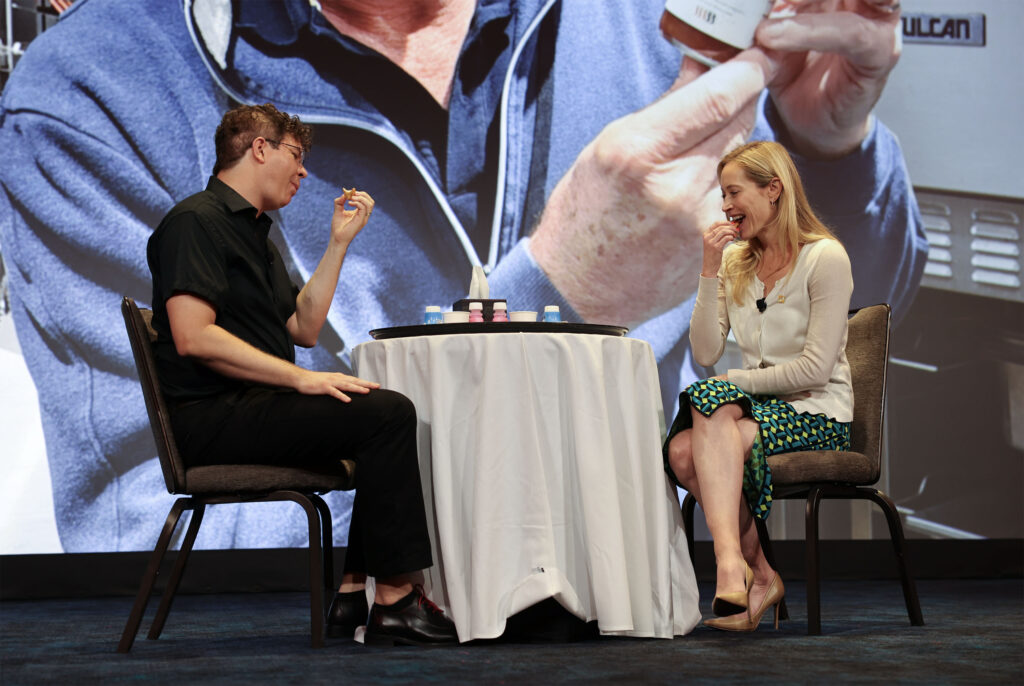
Many of us have enjoyed one of the industry’s largest North American trade shows and conference—LightFair. Prior to COVID-19, this annual event grew nearly every year since its inception in the early 1980s in New York City, when it was known as Lighting World.
LightFair began as a product expo from the locally involved New York City lighting community. Lighting World started very modestly and grew quickly, eventually crowding the New York Hilton Hotel beyond capacity. In 1990, LightFair was created (while Lighting World held local shows in Chicago and Los Angeles) and the year ended with one combined event that was ultimately owned by the IES, IALD, and AMC (the event manager and producer).
When LightFair exceeded hotel capacity, it began its large convention center occupancy, moving back and forth over the next couple decades from New York City to San Francisco, adding Chicago, with a few of the annual events in Philadelphia and San Diego. After outgrowing both California venues, Las Vegas became the biennial “west coast” home. In the 2010s, there were only seven or eight convention centers that could house the event.
By 2019, LightFair enjoyed roughly 650 exhibitors, 30,000 attendees, and 12,000 educational seats for over 70 individual seminars. It was the success of LightFair that largely funded both the IES and IALD until COVID-19 changed the world. LightFair continued into 2025 as an odd-numbered year event managed by a new partner—Messe Frankfurt—until the November 2025 announcement that LightFair would cease, with a new event, Light + Intelligent Building North America, launching in 2027 under the continued guidance of the IES, IALD, and Messe Frankfurt. The IES noted, “LightFair helped shape the North American lighting conversation. Building on that legacy—and the lessons of recent cycles—Light + Intelligent Building North America brings the best of LightFair’s core assets into a new, purpose-built platform focused on systems integration, secure controls, commissioning, analytics, and real-world performance.”
LightFair, and now Light + Intelligent Building North America, offer real value to those of us in the lighting industry. These events provide a product introduction forum as well as unmatched educational opportunities for attendees at all professional levels, from beginner to expert. They are unifying events—teeming with a sense of community that enables in-person interaction among all industry stakeholders and forges lifelong personal and professional connections with peers and colleagues. LightFair and Light + Intelligent Building North America are and will continue to be, for and by us.
Mark Roush, Fellow IES, LC, is principal at Experience Light, LLC. He served as IES president from 2015 to 2016.
Increasing Diversity and Inclusivity
By Antonio Garza
The milestone of the IES’s 120th anniversary offers an opportunity to reflect not only on technical leadership but also on how the Society itself has evolved. Over more than a century, the IES has grown from a professionally concentrated organization into a diverse, globally connected community that mirrors the expanding scope and influence of the lighting profession.
At its foundation in 1906, the IES emerged when participation in technical societies was limited by social, educational, and professional barriers. Early membership and leadership reflected those realities. The Society’s founders and early leaders established the scientific rigor and culture that remain central to the IES mission today. As the profession matured, however, it became clear that sustaining relevance would require broadening participation and welcoming new perspectives.
That evolution is now evident across the Society. Diversity—across gender, generation, race, geography, and professional background—has become a defining strength of the IES.
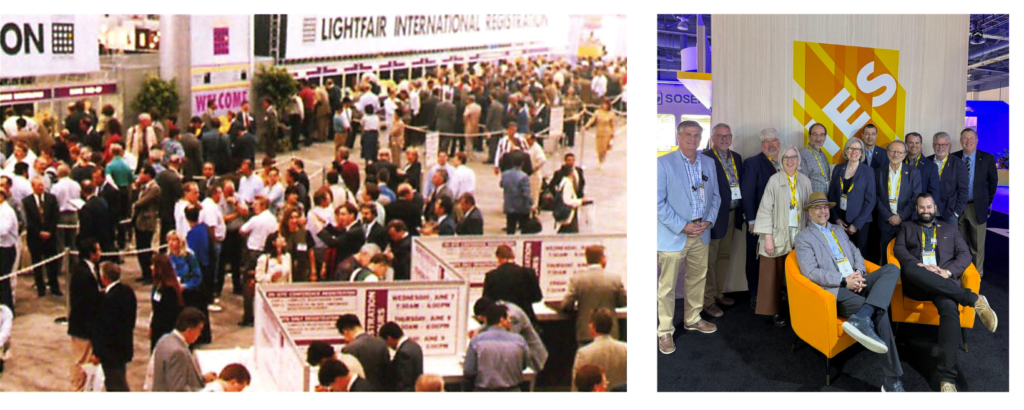
One of the most visible changes has been the evolution of gender representation. Where membership was once overwhelmingly made up of white males, a significant and growing percentage of today’s members are non-male, including women and individuals of diverse gender identities and/or racial backgrounds. This change reflects broader transformations within engineering, design, and research, and it has enriched the Society’s culture, leadership, and technical range. The presence of more women and non-male professionals with diverse ethnicities across committees, conference stages, and governance roles signals a Society that is both modern and inclusive.
Equally important has been the IES’s ability to engage younger professionals. Through initiatives such as Emerging Professional (EP) programs, the Society actively involves individuals in the early stage of their career in lighting. Mentorship, leadership development, and opportunities for meaningful volunteer involvement help integrate EPs into the life of the organization. This intentional focus on generational variety has helped the IES remain dynamic, innovative, and forward-looking as new technologies and design priorities reshape the field.
Diversity has also strengthened the quality and relevance of the Society’s technical work. Broader participation brings a wider range of experiences and viewpoints into standards development, recommended practices, and educational programming. As lighting increasingly intersects with health, sustainability, information management, and human experience, this breadth has helped the IES produce guidance that is both technically rigorous and globally applicable.
The Society’s global growth underscores this transformation. Once primarily North American in scope, the IES today includes members in more than 100 countries, with Board of Directors representation from multiple nations. This international presence reflects the reality that lighting challenges and solutions are shaped by regional nuances, culture, regulation, and economics. The IES now serves as a global forum for collaboration, knowledge exchange, and shared professional values.
In 2020, the IES formalized its commitment to a more inclusive professional community with the creation of the Diversity, Equity, Inclusion, and Respect (DEIR) Committee. Established to embed these principles into governance, volunteer engagement, and Society programs, the committee signaled that diversity is central to the IES mission. Since its formation, the DEIR Committee has helped guide leadership and support practices that ensure the Society reflects the full breadth of the lighting profession and its membership.
As the Society reaches its 120th year, its story is one of both continuity and transformation. The IES has remained steadfast in its commitment to technical excellence while continually expanding who belongs, who leads, and who shapes its future. By embracing diversity in all its forms the IES has ensured that its light shines brighter than ever, guiding the profession confidently into the future.
Antonio Garza, LC, is the president of Iluminacion Total. He served as IES president from 2020 to 2021.